

PodCastle 965: When I Cowboy in Puuwaawaa
Show Notes
Rated PG-13
When I Cowboy in Puuwaawaa
by Ferdison Cayetano
When I cowboy in Puuwaawaa my toss is always true. When I cowboy in Puuwaawaa I drive wild two-ton bulls to the paddock like they been raised from a calf on the ranch. When I’m done cowboying in Puuwaawaa and I ride back into town, the flowers on the brim of my hat catch the eye of all the pretty girls.
In all the islands you’ll never see a lei papale sparkle like mine, never smell one smells this good. Never get one brings this much luck to your toss and your wrangle. All that, and you ain’t even gonna ask where I got it?
On the slopes of frozen Waomina, in that American west, where the Pryor Mountains rise — that is where I met some friends, and did them a favor, and where they picked these flowers for me.
Waomina. Wao-min-a. Hold on, now. Over there they say Wyoming.
“This place here’s called Wyoming,” they said to us, in that bar, on the outskirts of Cheyenne, those so-called cowboys from Yankton. Cowboys with spurs on their boots long enough to trip over, and whips of rope instead of rawhide — how did they ever catch cattle?
“Wyoming,” I said to myself, later, teeth chattering in the cold.
Up in those Pryor Mountains I was lost on a horse I barely knew. But I wasn’t cold. Like I’ve never chased a wild bull up the snowy slopes of Mauna Kea, thousands and thousands of feet in the air, like I’ve never wiped cold and frost from the hardwood of my saddle.
I chattered it to myself again. “Wyoming.”
We were joshing around with the other cowboys, from places called Kansas City or Yankton or El Paso. Here for the rodeo like us, yessir, the 1912 Extravaganza Rodeo Invitational, making the bar lively, spinning tales taller than koa trees. Bulls bigger than locomotives they’ve yanked out of bushes. Cattle driven dozens, hundreds of miles.
Us, the Hawaii contingent, me and Johnny Kanakaole and Miki Vierra, we raised our glasses to them when they asked. “Five miles,” we said. Our longest drive. And they raised their glasses back at us, a glint in their eyes that was not quite respect.
Five miles! I’m sure they were thinking. They were thinking they could do our five miles before breakfast. That glint in their eyes. They were thinking — I am sure — they were thinking, who are these Hawaiians, who are they, to come to our rodeo, these people who are not American and yet think they can wrangle?
On one count he was right. We were not Americans — but cowboying ran in our blood.
“My daddy cowboyed,” I said to those Yanktonites. “My daddy, and his.”
“Hey now,” said a Yanktonite, looking around for the laugh, “five miles is plenty.”
I saw red. I bum-rushed him right then in the bar.
In the mountains the thought of him’d come around, every so often, give me fire enough to sit up. Keep an eye out in the cold. Mountain trails up there, a stray rock or root will set man and horse both a-tumble.
In our five miles you ride harder than any Yanktonite would in five hundred. We drive our cattle across jungle, into canyons, below waterfalls. Drive cattle through mountain air and clouds of wiliwili bush, down and up and down again just to get to market. Drive cattle straight into the Pacific for shipping, onto the great steamships too big to dock on Kawaihae. Swimming on our horses, dodging sharks, strapping cattle into harnesses for sailors to hoist onboard.
These Pryor Mountains are nothing.
The wind biting through my poncho, numbing my nose, my toes through my boots? It was nothing. Hoo, I’d love to see those Yankton cowboys try to rough it neck-deep in the shallows off Kawaihae. I’d love to see that.
I got a couple of good licks in before Miki and Johnny pulled me off. They’re good boys. I shrugged them off, saddled up, wen get back to our hotel.
And the horse bolted on me.
Wouldn’t take to the spurs. Not the hardest mouth I’d ever seen on a horse but when it insists on going up, into those mountains, into colder and colder air and not even a spur deep into his side gets him to turn — that’s when you curse those haole bastards for giving you a horse not even half broke. With the rodeo in a week or less, besides. Dirty trick.
Maybe if I’d been at my best. Maybe if Frankie hadn’t, if he hadn’t . . .
Oh, Frankie. You’ve heard of him, I’m sure.
Anyways.
I thought of Miki, the cold steel in his voice, in that berthing car, on our way here, San Francisco to Cheyenne.
“He shouldn’t be here,” Miki said. “Not as fast. Not fast as Frank.”
“Who is?” Johnny was sticking up for me. “Wrangles a bull faster than you, for certain.”
Miki looked at me. Studied. “True, once.” He looked out, away, into the American landscape. “Not for a while.”
“You’ll get it back, I’m sure, Han.” Johnny rocked me on the shoulder. “You’ll get it back.”
Johnny rocked me again and turned me towards him, and the cold bit into my bones and he gained forty years and fifty pounds and crow’s feet and a lazy eye and now he was Charles Apana, our ranch foreman. Big man. Sponsoring our whole trip. He was a kindly old man, and he had his hand on my shoulder, and I hated him.
I had just missed a toss, this half-sedate heifer barely even ambling in the paddock, and I had missed her. How could I have missed her? Every cow I went for nowadays, every cow on a drive that broke from the herd and sprinted into the jungle, my lariat following, landing in the bushes, just a hair too late . . . it was a wonder I wasn’t down slaughterhouse full-time.
But Chuck Apana liked me. That whole month I couldn’t have lassoed a fence-post but he wasn’t going to give up on me.
“Tricky girl,” he said.
I agreed, venomously.
He started in on a story, something gentle, something lilting, something true. A tall tale in which I was the star, the hulks I could wrangle back when. One I’d taken back all by my lonesome, he had fallen into a cliffs-edge and he had one leg dangling over the side, lowing louder than the water falling off the cliff around him, and nobody else would go out there, that close to the edge, that close to a bull like to kick your head off, but I did. I’d lassoed him up, I did, step by step on a horse I broke myself. I smiled at the memory. Started to clap Chuck on the shoulder when we both realized that when I’d brought that bull back it was Frankie lead-driving the herd.
It was Frankie lead-driving the herd and there were no tears in my eyes but I was begging.
“Nobody’s fault,” he was saying, but I bowled right over him.
“I have to,” I told him. “I have to go. I have to.”
He understood, but buried deep in his eyes was the fear. Fear that we wouldn’t win, that my toss wasn’t sure. Fear for Hawaii — would I embarrass us?
Still he said, “Go on, son.”
He said “Go on, son” and I wanted to say “Thank you” but I was too bitten-up inside to say “thank you,” I looked at him and just nodded and I hope he knew what I was saying, I hope that I’ll get out of these mountains —
A trembling below me, a desperate whinny. My horse had hit a rock wrong with its hoof. Stumbled. Took us both down. Must have rolled five, ten feet.
I got up with a crick in my back, but that haole horse had a sprained ankle. No chance he’d carry me any longer.
I ran my sleeve across my nose. I took him by his lead ropes and led him on.
In the snows above Cheyenne Miki was looking at me, Chuck Apana was looking at me, every damn cowboy from Puuwaawaa looking at me, trying to mask their pity. Frostbitten wind turning up the edges of their hats.
I didn’t need it. I didn’t need any of it, right now, all the resignation, their gentleness, sucking the fire out of my belly. Surrounding me on all sides. Looking at me like they were there.
Chuck Apana put his hand on my shoulder again. Frost shattering his eyelashes. Ice melting through my rawhide vest. Miki Vierra was lancing me through with that white-white gaze, they were all there with me in the Pryors, they were all there except…
Alright, I admit it. It was too cold for me to go on. We turned a corner and came up on a tiny little clearing out of the wind. Half something built already, a little tent-like shape made of stone.
I set my horse up for the night, bandaged his leg best I could. I tied him down — at least I could still tie a knot — and collected a few more rocks for plugging up the holes in that tent. You set a fire in one of those, it end up pretty warm. Soon I was asleep, as close as I could get, out there, dreaming. A waking dream where the waves crashed on the shores and the sand dunes of Kiholo, and for the first time in what could have been years, out there in the Pryors, I was warm.
“Tutu’s gonna kill us,” said Frankie. He was small. There were flowers in his hands.
“Who’s gonna tell?” I asked him. I was small too. “The horses? Come on.”
If we hadn’t found that wrecked canoe that day the whole thing’d be off. But we had snuck back onto the beaches by night, me luring him with tales of our grandfather’s grandfather.
We weren’t always cowboys. But the land was always ours.
Back in the day we were lords, you know? Ali’i of the islands. Pulling up to a battle in an outrigger canoe, taking another man’s guts out with a shark-tooth sword or a musket. I can’t even imagine.
“And, if you weren’t at war,” I said, tying a few more boards together, “you know how the lords knew who was best?”
“Lava sledding?” he asked, his voice tiny, but his hands sure, stringing, working quickly.
“Lava sledding,” I confirmed. “But this’ll do in a pinch.”
“Hanoa,” he said. All serious. My full name? I looked up at him and he was standing arms akimbo, face all scrunched up, doing his best impression of our tutu. We both doubled over. I turned away and tied one last knot; sled was all ready. Something light fell onto my head. I reached up and felt kika blossoms.
“For luck,” Frankie said, behind me.
With a smile on my face I said, “You first,” and looked up.
Up on that dune he was nowhere to be found.
I heard him again, his voice deeper, richer, playing at age. He was on a horse now, in the distance, the horse knee-deep in the surf. Frankie was looking past me. I knew he was looking at the paddock.
No, no, not now. We are supposed to go sledding.
“Ornery one,” he was saying.
Dread lanced through me. “No. No, I’ll ship him,” I said, reaching for the halter ropes on his horse, yards and yards away, my voice cracking as I said it but before I could get halfway down he was gone again.
I stumbled and I slipped. Rolled down the dunes, clawed at them and below the sand there would be the snow and the rock of the Pryors and now and instead, in the ocean before me, the bull.
Never seen a bull that much rage in his eyes. Never forget it.
Wind gusted, a cold wind, that was not Hawaiian.
Frankie shipping the bull . . . that wouldn’t happen for years, for years, but here it was now, huffing great clouds of steam out of the water, horns gleaming in the black, and today it was coming for me.
Good, I thought. Come for me instead.
It started the swim to shore, but it stopped mid-stroke and looked up. I threw a glance behind me.
We had an audience.
A figure loomed above us, and were those wings or shoulders blocking out the stars? A stout figure, short. And yet it loomed. Rose out of the sea like any other island.
The bull looked at me, back up at it, me again. It charged.
The island-figure balked, and as he panicked he shrank and shrank and fell out of the sky, and the bull caught on. Charged that tiny, falling figure instead. Cleared my head to gallop on nothing, two tons of him drenching me with saltwater and up he went and away, I could feel him, I could feel him straining my mind and breaking free and gaining form and weight and malice all at once, out of my head, an exotic and unnatural birth, and I was rolling in my covers and murmuring to myself in that little tent-thing, sweat pouring off me in buckets, what a dream, God damn what a dream.
Who knows how long I was lying there half-conscious. Day in, day out. The thing that got me fully awake was the head popped in through the canvas flap I’d put up over the doorway.
Thought I was still dreaming when I saw Frankie’s head.
Frankie’s head on this stout little body, Frankie writ miniature, all decked out in cowboy clothes.
He looked down at me.
It wasn’t quite the same, he was there, but the planes and angles of his face, the . . . the light. Didn’t reflect off him right.
He opened his mouth, but no words came out.
The little stone tent shook. Lowing outside, and huffing. Frankie looked scared.
Damn if he didn’t look the same scared.
Frankie scampered inside, and I took him, sheltered him behind me. Another demonic low. Snow shook onto us, from the space between the bricks.
Eventually, the huffing receded, and I pulled him out from behind me. Held him by the shoulders, just looking at him.
“Frankie?” I asked.
He shook his head at me.
“My . . . my grandpa would talk about you. People like you. He met a menehune once, he’d swear.”
Frankie raised his eyebrow and shook his head. Not quite, he was saying.
He extended a hand out, a finger, touched my forehead. And I knew everything that he knew, that his people knew. This pass, this was Arrow Shot Into Rock. Below me the Ford where Magpie Jumped. And these were not the Pryor Mountains — these were the Baáhpuuo Awaxaawé, through which the waters of the Iisaxpúatahcheeaashisee flowed, and their inhabitants were older than man.
For that second Frankie was the land. Frankie was more than the land. These were the Awa-Kulay — these were the Little People — these mountains were theirs.
He was speaking to me. A flurry of images, gestures, landscapes. His point was made all the same.
Sorry, he was saying.
“Sorry for what?” I asked him. A sharp image of my horse, turning left instead of right, galloping into the mountains instead of back to Cheyenne proper.
I wanted to see, he said. I wanted to meet you.
“Me?”
He nodded. You are far from home.
“An honor, I suppose.” I couldn’t help but smile a little. “So it wasn’t all my fault, then? Not getting used to a new horse quick enough?”
He just looked at me.
“Yeah, alright.” I turned, looked for my hat, put it back on.
He held his hand out. I took it and he led me out of the sweat lodge.
Next to me my horse huffed, hale and hearty as he’d ever been. He reared up like he was showing off. Bandage not needed at all. He walked up to Frankie and gave him a nuzzle.
Out in the cold there was the world to get back to, and the rodeo, and I wanted to ask him for help, but there was something else to ask him first.
“You don’t have to look like him, do you?”
He tilted his head, considering. I was looking at him, and I couldn’t have told you what changed, but in a moment he looked different. Thinner eyes, eyebrows closer together. Fatter cheeks. Aw, he couldn’t have been older than a boy.
It was funny, though, the way his eyes changed shape, changed color. But the light in them stayed the same. As bright and as curious as Frankie’s.
“And what’s your name, then?”
He shifted again. Or maybe it was only a picture in my mind’s eye. An eagle flapping its wings against the blue of the sky.
“Eagle?”
He puffed and shook his head. The eagle was there again, flapping its wings, primping and preening and prancing. Doing a little hop, because he knew I was watching.
I laughed, once, a deep laugh from the belly. “Okay. Strutting. Strutting Eagle.”
He nodded at me, victory in his eyes.
“I guess I need your help, then, Strutting Eagle.”
Panic, raw panic, that black demon-bull flashing behind his eyes. He was hearing that low again, I knew. I felt this surge in me. I wanted to protect him.
Need yours first, he said.
We were riding along in the Pryors, him sitting double in front of me. Every so often I slapped his hands away from the reins.
Horse knew to stop before I saw the tipis. It was a nice little village, nestled under trees, tall, strange-leaved, that I’d never seen before. Or it would have been. Every other tipi was bashed in, crushed up.
One destroyed home stood out to me in particular. Amid the devastation, in the middle of that tent, was the hoofprint, twice as big as a normal bull’s. It smoked a little.
Strutting Eagle brought me to his elders. I dismounted. Held my hand out for a handshake, ended up bowing. They looked at me all impassive. Strutting Eagle was almost more afraid of them than of the bull. Though they were only an inch or two taller than Strutting Eagle — and Strutting Eagle barely came up to my waist — they towered.
And though they did not speak, though images from them did not flash in my mind, I knew what they were thinking.
I knew when one of them reached out and batted Strutting Eagle across the back of the head. He jumped and scurried behind me, his head peeking out at them.
He meddles, one of them said to me, like all youth meddle. He pulls things out and cannot put them back. We apologize.
The one speaking — her name was Thunders In The Pass — inclined her head.
And we ask your help.
I was about to ask “With what?” but around us the other Little People talking among themselves, checking on their wounded, began to still. But they would, one or two at a time, rock-still, and even when none of them were moving something was crashing through the jungle.
Fast as I could I mounted up, wheeled around the camp. Scanning the forest —
Eyes glowing red under the trees, shades of black darker than shadows.
“Okay,” I said. I took my lariat from the side of my saddle.
This is how it should have been.
Bursting out of the shadows he charged me. I started to swing my lariat, low and to the side. I charged him right back.
At the last second — I fought it, that new and terrible instinct in me, to toss, toss early, to make sure — I threw.
Not quite at the last second.
A perfect toss gets you around the bull’s neck, or his belly. Guide him real easy. Him I got by the horn.
His head jerked and he groaned, but my horse was steady under me, hooves digging into the ground, straining against the bull’s weight. I was keeping the horse steady, still, a rock upon which the wave of this bull would crash. Would fall.
I had him. That motherfucker, I had you —
My lariat, shrunken by the snow and the cold, snapped in two.
My horse stumbled backwards. The bull huffed, almost fell onto his side. Shook his head. Ran straight for the forest to disappear into the leaves.
Nobody moved for a while. Silence, and all the Little People were still. Waiting. No way a two-tonner, three-tonner like him can just disappear without even a rustle.
A low, a great and terrible low that I felt in my chest, rustled the leaves, set birds flying.
Water rushed in around the Pryors. The black moonlight-flecked ink of the waters off Kawaihae at night. I took a deep breath, in, out. Little People exchanged glances, but there was a grim triumph in my gaze.
He was going back there? He was running? I had him, I knew I did. He was running scared.
The black water pooled, rapidly, setting me and the horse afloat.
The Little People were climbing up the rocks, evading the water. They would nod at me, express gratitude, support, a quick thank you. They all knew what was coming. I knew it. The bull knew it.
And so did Strutting Eagle. He just wanted to help.
I’ll come, he said.
I said “no —” and the elders around him reached out with a No so loud that it echoed in my own head, but he grabbed onto my ankle and vaulted onto the horse and darkness ate up the sky and it was just me and him and the bull out on the Pacific.
Me and him and the bull, and Frankie, out there in the tide, so close to the steamship and their harness but the bull was thrashing like a maniac possessed and the rope around his neck went taut and slack again as he dragged Frankie off his horse. Into the water.
I watched him fall again and I yelled for him. Ever since he went down I have been yelling for him but now the wind that came off the waters was really battering me in the face, blowing my hat off my head. Cold waters, foaming up to my waist, horse shivering below me, the last echoes of his name fading into nothing.
I was there again, and I froze.
Strutting Eagle knew. He squeezed me tight. Then he was gone, too.
I turned around and he wasn’t there. The stars shone brighter in the sky, they all pulsed for a moment and there he was, swimming towards Frankie, trying to get him by the arm. The bull coming towards the both of them now.
He grabbed Frankie’s arm — my eyes widened — but I guess you’re not supposed to fool around that much in somebody else’s head. Somebody else’s memory. Kids just don’t learn, do they?
Even from that far away, I could tell. Something had been screwed up. In the water now was one person who couldn’t decide who he was, drowning. But either way he needed me.
You know, they . . . I can joke, now, with Miki and Johnny, about those haole cowboys, in that bar downslope, lifetimes ago. “Of course they started that fight in the bar,” one of them says, and I agree and we nod and laugh and while away the slow nights on the ranch. But it wasn’t, it wasn’t their words. Wasn’t his words, that Yanktonite.
I am a Hawaiian cowboy. I can take a joshing.
But after he said it — “five miles is plenty” — and waiting for that laugh, he ran his fingers across the brim of his hat. Two across, three back.
He did it just like Frankie would.
Strutting Eagle disappeared below the water.
I roared. I roared and the water pushed against the current to ripple backwards and I dug in my heels and I went blasting along on the horse’s back.
The horse was swimming, cresting the waves underneath me and I lost sight of him. Them. No, this won’t happen like it did, I only scrabbled at my saddle-straps for a second, this time I got my knife out of my boot and just cut myself out of the aweawe and I swam at him, with every muscle in my body I strained veins popping in my eyes I fucking swam, and I got there. I got to that god-damned bull and I climbed up on his back and took his horns and wrenched him, hard wrenched him to the right. He groaned and struggled and when he kicked his hoof-tip cleared Frankie’s head by the tiniest inch.
Or Strutting Eagle’s head.
But he was out there, he was treading and he gave me a thumbs up and I gave him one back and I smiled at him, wider than I ever smiled at anybody before. My little lord out there in the water.
I reached down and he clasped my hand and he was on the bull behind me, holding on for life, tighter than that, even, when he felt me shuddering. He felt a sob come out of me.
“It’s okay,” Frankie was saying, “it’s okay.” His face, his cheek nestled against my back. Oh, how I missed that feeling.
Felt like a . . . a rib was about to pop, it did. Everything did. But I never wanted it to end.
My hands were on the bull’s horns and I pushed and yanked and got him right under the steamship. They tossed me the harness and we were back in the water, slinging the bull up together, and the whole time I was keening, this high-pitched keen between breaths, I didn’t care if those sailors could hear me over the waves. Tears streaming into the ocean but my grin couldn’t have been wider.
Now Strutting Eagle was on the deck of the ship. He reached down and I took his hand and he hoisted me up into dry air, and when I dusted myself off and looked around the Pryor Mountains were alive with the gold and pink and blue and yellow of the sunrise, all of it hitting my face at once.
He smiled at me, he did. Strutting Eagle on the ship. My brother was in his smile.
Around me the trees whispered, but there were no trace of the Little People. That anybody had ever lived there at all.
In front of me, lying on the dirt, was my hat.
I bent over and picked it up. Smiled at it. Turned it, this way and that.
A lei papale of American flowers. Who’d ever have thought they’d be so pretty? And under the flowers a row of blue beads shimmered. They’d shimmer even during pitch-black night.
I doffed my hat to them, to nobody, to everybody, and put it on. Mounted my horse. A gentle pathway down the mountains took me right back to Cheyenne.
Usually you make a lei papale and it wrinkles up within a week. That’s just the way it is; you make a new one. But the bluebells and cinquefoils on my gift? Fresh, fragrant as the day they were picked. Beads as shiny too.
Every morning I put my hat on and I go to work. And every day there is a newfound glory in ranching on the lava fields of Puuwaawaa. There is a quiet peace in riding out at dawn to brand cattle or mend the fences on the high slopes and taking one moment, just one, to breathe in the sight of Mauna Kea behind me, and Mauna Loa afore, and the Kona Coast besides.
Oh, right! Before I forget to tell you. The whole reason we were up Wyoming in the first place. The rodeo. That all-important rodeo, where the cowboys came from all over, and at stake was the pride of Hawaii.
Of course I took the crown.
You weren’t doubting me, were you?
Roped a steer and tied him up in fifty-seven seconds flat, left a second-place straggler from El Paso in the dust by over fifteen seconds. Had Johnny and Miki crowing while all the Americans sulked.
The strength of my toss, the surety of my hand. It was back, when I came down off those mountains. Quicker than it ever was. And maybe even the tiniest bit more precise, can you imagine?
Anyways, it must have been the magic in the flowers.
Host Commentary
…aaaaand welcome back. That was “When I Cowboy in Puuwaawaa” by Ferdison Cayetano, and it seems like this is his first publication with Escape Artists, and hopefully not his last, so if you enjoyed that, then please check out his other tales at ferdwrites .
Across a breadth human civilizations, we hear stories of fey, hidden folk and little people, a class of beings who live alongside us, yet apart and unseen, unless they choose to reveal themselves. Ferdison’s tale is a delightful cross-cultural moment, where two such “little people” legends overlap and suggest an underlying supernatural basis for all such legends, and with that an extra whiff of believability.
But that’s just the frosting, not the cake! Menehune and Awa-kulay are each their own majestic folkloric deep-dives, if you’re the sort who likes to do that—and I know I am—but this is a story about processing grief. About survivor’s guilt. About the things we wish we had said or done when our most beloved leave us, and about the things we fervently believe we could have done, even if it’s all wishful thinking.
Han did not just let his brother die, but damned if his mind and body aren’t telling him otherwise. We carry trauma in the body. We can’t rope anymore. Can’t play the piano anymore. Lose our balance, lose our grip, our breath, our footing.
Is the rampaging spirit in the mountains actually a bull? Probably no more than Strutting Eagle is Frankie. But the joy of this tale is the mutualism we see between Han and the little people, in which they are able to frame their otherworldly danger in terms of Han’s trauma, and in asking him to help them, give him the chance to redeem himself… to himself.
Han knows he can’t bring Frankie back. But his body doesn’t. The experience, and the catharsis, are utterly visceral. His unashamed ugly cry is a relief that we long for, as is his happy ending. It ends up an exemplar of that superficially counterintuitive advice: that helping others is often a way to help oneself. So toss some kindness out into the world, and while you’re at it, extend a little grace to yourself as well. You. Really. You need it.
About the Author
Ferdison Cayetano
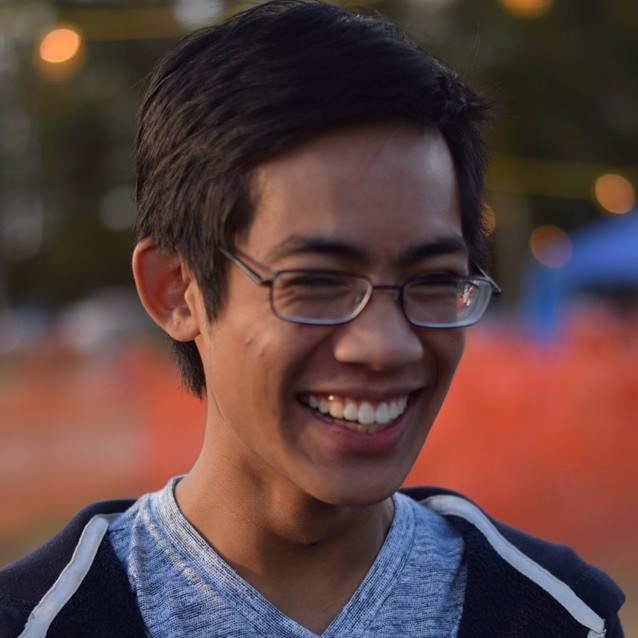
Ferdison Cayetano is a Filipino-American speculative fiction writer based in Brooklyn. His other publication credits include the Magazine of Fantasy & Science Fiction, Strange Horizons, and Apex Magazine. You can often find him on JSTOR reading about various mythologies, even if it’s the weekend. Elsewhere, he is at www.ferdwrites.com or on Twitter/Bluesky @ferdwrites, where he follows back.
About the Narrator
Trey Nakamura

Trey is a Las Vegas-based voice actor and narrator. He enjoys tabletop games, miniature painting, fighting games, and fishkeeping.
