

PodCastle 950: FLASH FICTION EXTRAVAGANZA: Reapings
Show Notes
“An Acre a Year” Rated PG, previously published by Flash Fiction Online
“The Deading Veil” Rated PG-13, is a #PodCastleOriginal!
“Taking Root” Rated PG, previously published in On Spec Magazine issue #130
An Acre a Year
By Gregory Marlow
An acre a year was all they asked. I agreed. Fifty acres was too much for William to work anyway, even with my help.
The first year, William didn’t notice. I stood on the hill behind the house and surveyed the fields below. Cows, hay, alfalfa, corn, sweet potatoes. It looked the same as the day I married William. Maybe a few corners rounded off in the distance. Or was that my imagination?
What was not my imagination was how the little men delivered on their promises. Travelers willing to work for a meal and a bed for the night. Cows delivering calves effortlessly. Neighbors offering to trade a tractor for a fraction of its worth. Fields of corn yielding twice the expected amount, allowing William to sell the excess and use the money to hire help.
And William, in my bed at night again. The man I married, not the exhausted shell dragging himself in after dark with barely enough energy to eat supper, much less tend to a lonely wife. The fields had been his mistress of necessity. She provided, but not nearly as much as she took. If I had not agreed to the trade, she would have taken him forever.
I discovered them in the loft of the barn, five tiny men ducking behind the hay, never completely leaving the shadows, never letting me fully see them in the dusty beams of light that spilled between the planks. They proposed a deal — our happiness for land. There was no contract, just a prick of my finger on a dry piece of straw and a drip of my blood into a bale of alfalfa in the far corner of the loft. They said the bale would bind the deal, an incorruptible yield from the very acres I had promised.
I worried, but I never regretted the decision. If fifty acres were too much for William at twenty-five, how would he handle the burden at seventy-five? Would we even live that long? The land would break him, and he would die young like his father.
I was pregnant with Billy by year two.
In year seven, I found a troubled William at the hilltop overlooking the farm.
“It used to feel so much bigger,” he said.
By then, we were living a comfortable life, with regular hands working the fields for cash on the barrel. I still went to the fields but for leisure instead of labor. William would sometimes join Billy and me for afternoon picnics.
I asked the tiny men in the hay loft where the land went. They explained that the acreage had not disappeared. It had been moved within the boundaries of a world I couldn’t see. It was in the world of the Fae.
“Do you farm it in Fae?” I asked.
“Others do. Those who understand the land like you and your husband.”
By year fifteen, William began to obsess over the diminishing farm.
“Am I losing my mind?” he asked.
I tried to soothe his worries with affection, kisses, and reminders of how blessed we were.
In year twenty-two, he had the land surveyed. When the report came in the mail, William retrieved his deed to the property from the lockbox under our bed and sat down at the table to compare. The numbers matched: twenty-eight acres, not the fifty he remembered.
I feared he would have a mental breakdown. His land was the one thing in this world he thought he truly knew.
So, I told him everything.
He had never been angrier with me. I took him to meet the tiny men. He asked if the deal could be reversed and if he could buy the land back.
“Money is meaningless,” said one of the men.
“Land is eternal,” said another. “Like us.”
That night, I tried to reason with William. We were getting older. We would have more security and less work in our golden years.
“What about year fifty?” he asked. “They will take it all, and we will have nothing. What then?”
In year twenty-five, Billy married, and with the money he saved over the years, he bought a small farm of his own, a manageable fifteen acres. In year twenty-six, they gave us our first granddaughter.
Only William and I noticed the disappearing land. In year thirty-two, we made the hard decision to sell the cattle. In year forty-one, we stopped growing alfalfa. One lonely bale remained in the loft.
As our hair grayed and our joints ached, we found ourselves down to a few acres that nearly managed itself with the help of a single hired hand.
The tiny men were firm. “The deal is binding,” they said from behind the bale of hay that held my blood.
“What if we refuse to leave?” I asked.
They did not answer.
“We can move in with Billy,” I said as we stood at the hilltop overlooking our last acre. “Build a small house and help him on the farm? I could watch the babies and —”
“No,” William said flatly.
“We have money in the bank to buy an acre. We don’t need more than that.”
“This farm was my life. I won’t leave it.”
When the last day arrived, William got up early, paid the hand, and told him he would no longer be needed. William killed a chicken, and I dressed it and put it in the oven. I picked tomatoes, corn, and zucchini from the backyard garden and onions from behind the barn.
Billy, Sarah, and the kids came for supper. Billy and William talked about tractors, and I gave Sarah my yeast roll recipe.
We watched from the doorway as they drove away.
I took William’s hand and led him to bed early. If we woke in the morning, if we woke in Fae, I wanted us both to be well rested. Fifty acres is a lot of land for one man to work. He would need my help.
The Deading Veil
By RJ Aurand
Every woman in the family wore the shroud exactly twice. Once on her veiling day, and again on the day of her death. It was older than memory, diaphanous and fine as spider silk. Family lore held that, in the old country, a cunning ancestor had won it from the fair folk in a game of chance.
To be veiled was a weighty responsibility. Beneath the cloth, the wearer saw visions of the deaths that would occur before the next veiling, including her own. Shrouded women were the sacred keepers of this knowledge, tasked with using it to guide the rest of the clan to prosper.
They were also as short-lived as mayflies. Perhaps this was a consequence of the veiling, a Faustian bargain made in exchange for the gift of foresight. But they invariably died within a few years — often just months.
Iris was twenty-five on the morning of her veiling day, and because of this she knew it vexed her uncles that she had yet to produce any children. After all, the knowledge the shroud granted was useless without a lineage to protect. Iris’s grandmother had died at twenty-eight, pushing her infant uncle out of the path of a combine harvester. Had this been predestined? Or had she chosen this fate, sacrificing herself to circumvent the death of her youngest child? Iris often imagined her grandmother’s final moments. What had she felt as the blades bit into her flesh? Had she died satisfied, knowing she had protected her progeny?
The night before the veiling was always a feast, but the day itself was somber. Iris sat, dread pooling in her stomach, as her younger cousins washed and plaited her hair. The simple muslin gown she wore was not so ancient as the shroud, but very old nonetheless. As it settled against her skin, she felt herself in triplicate — daughter, mother, grandmother, indistinguishable, right down to their dark eyes. Few portraits existed of the women who had come before them, but she felt a kinship as she walked in their footsteps that ran deeper than blood. Something like the anxious lowing of a cow about to be slaughtered.
Women did not always survive the ceremony, or at least not in a way that mattered. Three generations prior, a great-aunt had lain beneath the shroud and never emerged. When someone was at last sent to fetch her they found her catatonic, gossamer fabric clutched tightly in her hands. She died three days later without ever speaking again.
At sunset, Iris was escorted to the small stone chapel that stood adjacent to the family cemetery, watched over by a lone persimmon tree. The clan swept across the fields like a murmuration, the faces of her uncles and their children softly illuminated by the candles they carried. As they processed into the growing darkness, one small girl broke ranks and ran to Iris, taking her hand. Her eyes shone in the soft gloaming, deep as the waters of the lake, dark as Iris’s own. This would be the first veiling she witnessed, and Iris’s last.
Inside the chapel stood a few dry-rotted pews and a simple altar, upon which the shroud was kept in a carved wooden box. As she watched her uncles and cousins place the candles inside, Iris faintly recalled doing the same for her mother, who had grasped her hand tightly as they walked together through the fields. Just as on that night, a dark-eyed woman entered the chapel and was locked, alone, inside.
As if in a dream, Iris approached the altar and opened the box.
After her veiling, Iris’s mother had become withdrawn and dark. She drifted through life like a shade, taking little food and rarely smiling, as if the shroud had taken something from her she never got back. Although Iris had been young, she understood that the warm, witty woman who had loved her so fiercely was gone. A husk had taken her place. She didn’t weep when her mother drowned in the river six months later. What good was it mourning someone who was already dead?
At her wake, as water dripped steadily from the shrouded corpse laid out on the table, Iris’s uncles muttered that her pockets had been full of stones. Years later, when she was old enough to understand what that meant, Iris wondered why she had done it. Had the voices in the shroud commanded her to? Or was she simply trying to escape the things she had seen beneath it?
Inside its box the veil was luminous, as if infused with moonlight. It was easy to believe that its maker was inhuman — no deft matriarch could have woven something so fine. It slipped, watery, between Iris’s fingers as she lifted it from its case. A faint whispering emanated from its folds.
Iris was keenly aware that a glimpse into the future came at a human cost. For centuries, the family had offered the shroud its women, and it had consumed them. Could the certainty of death for one truly be worth the nebulous possibility of cheating it for others? The veiling was a relic of a darker past, one in which a simple misstep could obliterate a household. But Iris’s uncles had lived to become gray — a privilege she was not to be afforded. Their children had flourished and produced children of their own. Wasn’t that enough?
Iris thought of the other women, the mothers and grandmothers and sisters and aunts who had also worn this gown, who had died where she now stood. Something within the shroud beckoned her to join them.
For a moment, death hung suspended from her fingers.
Outside the clan stood vigil, waiting for her to emerge ripened with its terrible wisdom. Iris would be immured, a talisman against misfortune, until death claimed her and the eldest of her cousins took her place.
Her hand found the candle of its own accord.
Piece by piece, she fed the shroud to the flames.
Taking Root
By Jeanna Cammarano
I can see it in the distance, taller than the rest, its long limbs stretching through the forest canopy toward a haze-covered sun. The mother tree. That’s what we called it. It was the largest one, the oldest too, with a trunk we couldn’t wrap our arms around.
“This is the one that takes care of all the rest,” I remember telling her. “Just like I take care of you.”
I hadn’t actually expected to find it still standing after all this time, after everything that has happened. But against all odds, here it is. Except it’s just me and the tree now. My throat goes tight, but I continue on. There’s nothing else for me to do.
We used to hike through these woods every day, our feet creating worn paths that led to our tree. I look for them now, but I can’t find them. I can’t find any trace of her. The dust and ash that rain down from the sky blankets the forest floor, obscuring both path and hope along with it.
My breath comes heavy with each step, and a wet cough rattles in my chest, forcing me to stop more often than I’d like. I don’t wear my gas mask anymore, there’s no point. The spattering of red and black against my palm as I cough tells me enough. I fall easily — my hands are scraped raw, my knees bruised.
She fell here, once, back when the forest was still green, my world still whole. I picked her up and cleaned her palms, but she didn’t cry. Her worries lay with a tree. A small twig had broken off, and she held it out to me.
“It’s okay,” I assured her. “It’s just a scrape, like yours. That tree will heal itself, and if it needs help, the mother tree will give what it needs.”
“But how? Trees don’t move.”
“Ah, but they’re all connected, little sprout,” I replied. “Through the mycorrhizae.”
“Myawhat?”
I laughed. Sometimes I’d forget her age and speak like a botanist instead of a mother.
“The fungus that grows beneath the soil connects them all. The trees can talk to each other or send nutrients if needed, through the roots.”
Often, I would catch her bent over the earth; ear pressed to the ground beneath the trees so she could hear them. When I watched her and the world stilled, I thought I heard them too.
The trees say nothing now, not to me.
There is a small clearing up ahead. One I instantly recognize, even if the green grass is covered in soot. A part of me breaks to be here again.
I see this place in my dreams, an echo of my memories. A group of people gathered to say goodbye, tears streaming down their faces. Together they tip the ashes from a bronze container and scatter them across the earth, ending at the foot of a large tree. The mother tree. Our tree. I wake up from this dream choking on my grief — the sorrow as fresh as yesterday. And all the days before.
I make my way forward. From a distance, I wouldn’t have been able to tell that anything was wrong, but up close I can see the signs. A few limbs are broken, a few are bare. When I examine the trunk, I see signs of rot. A growing crack straight down the middle. Patchy bark. Black striations riddle the bare sapwood where the bark and cambium have sloughed away, corruption running deep through its core. I wonder if this is what my lungs look like.
“Look, a new branch,” she called out, hopping from one foot to the next, pointing at an old tree.
“Yes, good job,” I clapped. “Where there’s growth, there’s hope.”
“Where there’s growth, there’s hope,” I repeat to myself, looking for some new twig, some sign of life. I’m not sure I could handle it if our tree was already gone. What would this place be without it?
I never asked her where she wanted to be buried, but when she grew too weak to walk through the woods, she told me to bring her here. After.
“You just worry about getting better.”
“I’m going to grow big and tall one day,” she said, and I smiled. I knew she would. She was the strongest person I knew.
“I’ll be a tree, and I’ll tower over the rest, just like our tree. Take me there,” she said again. And I promised her I would. And I did.
Once I wished I was a tree too, so I could heal her through my roots. I imagined giving myself to the soil, watching her sprout long limbs as she flourished under clear skies and a warming sun. But wishes are just that, and even then it was too late — the air we breathed already thick with miasma. We just hadn’t noticed yet.
The sky is dark now; the world muted — but the pain is sharp and unyielding. I curl up against the trunk, the protruding roots wrapping around me. I press my ear to the earth. Maybe I listen for the trees, maybe I am listening for her.
“Do trees say ‘love you’?”
“In their own way, I think they do.”
The wind whips around me, stirring up debris, choking me, and when I open my eyes, I can’t see. The ash is thick in the air and the only thing anchoring me to the world is the trunk at my back. I feel around the roots, trying to locate my pack and mask, but I can’t find it. I cover my face in my shirt. These storms keep getting worse.
The crack is deafening. I don’t need to see it to know that the trunk has split in two. I scramble away as fast as I can — self-preservation, an instinct I just can’t kick. The crash reverberates through the woods, into roots, and up my spine, but it doesn’t crush me — not outright.
Still, I can’t move. My breath comes in short, rasping hiccups as I struggle for air. Air that is dust and ash. I remember a time when it was easier to breathe. That was ages ago.
When the dust settles, I am in the middle of the clearing. It is the same place I stand in my dreams. The same place I said goodbye.
I pretend I am a tree. With my ear to the ground, I listen. My roots stretch out beneath me. I pour myself into them, reaching out, searching.
Here it doesn’t ache quite so much. I find relief amongst the soil. And something else.
It is hard to see along the ash covered floor, but it’s there. A single sapling. It’s a gangly thing but strong, with roots that branch out to mine.
Where there is growth, there is hope.
“There you are,” I say.
Host Commentary
Hello, and welcome to PodCastle, the flying castle of fantasy fiction. I’m Wilson Fowlie, today’s host and your audio producer for the episode.
Today, I am privileged to bring you three stories with the theme of “Reapings”.
The first is “An Acre A Year” by Gregory Marlow and read by Karen Menzel, and which first appeared in Flash Fiction Online, on November 1st 2024.
And now, make sure your crops are watered and your animals are fed, for our story is about to begin:
Aand welcome back. That was “An Acre A Year” by Gregory Marlow.
If you enjoyed that and want more stories by him, we at Escape Artists have premiered a couple of them: here on PodCastle, “A Jar of Malice” was episode 797, and earlier this year, our sister ‘cast PseudoPod published “Impostor Syndrome” as episode 1025. (1025! I really want to digress here and point out how pretty damned amazing that number is; over a thousand stories from just one podcast and it represents less than a third of well over 3000(!) stories available through the Escape Artists Foundation. But that would be a digression, and I shouldn’t do that.) I should instead point out that there are links to even more stories on his website, gregmarlow.com.
About today’s story, Gregory told us:
I was born and raised in East Tennessee, where the Appalachian Mountains overflowed with the fantastic. Mermaids and sirens sang in twangy, southern accents to me as I fished on the creekbank. Fairies danced in the thicket behind my house. Goblins hid in the haylofts.
Thanks, Gregory, for the thoughts and for the tale.
Our next story is “The Deading Veil” by RJ Aurand, narrated by Rosie Sentman. It is, happily for us, a PodCastle original.
And now prepare yourself for a very short stint of being able to see into the future, for our story is about to begin:
Aand welcome back. That was “The Deading Veil” by RJ Aurand.
If you are interested in more from RJ, I can’t point you to any stories previously published by PodCastle or even Escape Artists, as this is their first. However, there are several stories linked at their website rjaurand.com.
About “The Deading Veil”, RJ says:
On a grassy hill at my family’s homeplace stands a small cemetery with low stone walls, shaded by a persimmon tree. A few of my ancestors are buried there, and my grandparents intend to join them one day.
In the town nearby is another cemetery, where a handful of distant relatives who passed in the 19th century are interred. As I wrote this piece I thought about the random misfortune that shaped their lives — the toddler who ate a box of matches, the farming accidents, the illnesses for which no cure yet existed — and the way these events would come to shape the lives of those who came after them.
This is a story about intergenerational trauma; about reckoning with tradition, acknowledging its roots, and commending it to the past where it belongs.
Thank you, RJ, for the thoughts and for the story.
Our final tale is “Taking Root” by Jeanna Cammarano, read by Dani Daly. It was previously published in On Spec Magazine, issue 130.
And now, take a deep breath and put on your protective mask, for our story is about to begin:
Aand welcome back. That was “Taking Root” by Jeanna Cammarano.
If you enjoyed this story and want more by Jeanna, well, she hasn’t had any previous stories on Escape Artists, and she doesn’t have a dedicated website with links, so I can only reiterate the information in her bio, which says that her fiction is linked at wordrat — W O R D R A T .bsky.social — on Bluesky.
About “Taking Root”, Jeanna said:
As a parent, you’re used to a certain amount of self sacrifice. You give out of love, care, and necessity. Bringing life into the world is no easy feat. Maintaining it even more so. I think it’s the same for everything else too. Caring for our people and our world takes sacrifice.
My kid and I have spent a lot of time exploring the forest together — most of their early childhood really — and we’re very lucky to have access to a beautiful forested space right in our backyard. It’s a wonderful place to grow up. I hope it is still there for all of the future generations to enjoy, but given the world today, I just don’t know.
I wrote this piece out of fear I think. A lot of my writing stems from my own anxieties. But this fear, fear of losing not only loved ones but life as it once was, is different than the what ifs. For me, Taking Root is a grief story for a world already pushed over the brink. Kind of bleak, I know. But there’s still hope. That’s what I want people to take from this. Look for the signs, give what you can, and hope.
Thanks, Jeanna, for the story and your thoughts about them.
Well, now it’s time for me to talk about my thoughts on the stories. I’m won’t say much, because I’m already using more words than any of the stories have, and I certainly don’t want to exceed their total word count, since you’re here to hear them, not me, and I haven’t even done the boilerplate stuff yet!
So I will mainly remind you that the theme of the episode is “Reapings”. The verb ‘to reap’ literally means ‘to cut and collect and grain crop’. Of course, humans, with our near-infinite capacity for metaphor in language, have used it to mean ‘to get something, usually something good, as a result of one’s own or other people’s actions’, probably for about as long as the word has existed.
In “An Acre a Year”, there’s the obvious literal meaning: the reaping of hay and alfalfa and so on. But there’s also the metaphorical reaping of discord from the unilateral decision made by William’s wife and the dishonesty that went with it for so long. You could also argue that the fae people were reaping the land itself, not just from it, which makes me wonder: in this world, does the Earth shrink as the land is taken into the Fae realms? Whoa . . .
In “The Deading Veil”, the community is reaping the dubious benefits of clairvoyance from sacrificing women’s lives. Of course, because they do that, they end up reaping the loss of those same benefits, such as they are.
“Taking Root” shows us that we may be able to reap hope out of sorrow, if we can look at things the right way.
Reaping requires planting to be done beforehand. There’s no paying on credit: if you don’t sow, you have no harvest. You pay up front, whether with seeds or deeds, and once you reap your harvest, there isn’t more to pay, at least not directly for that crop.
About the Authors
Jeanna Cammarano
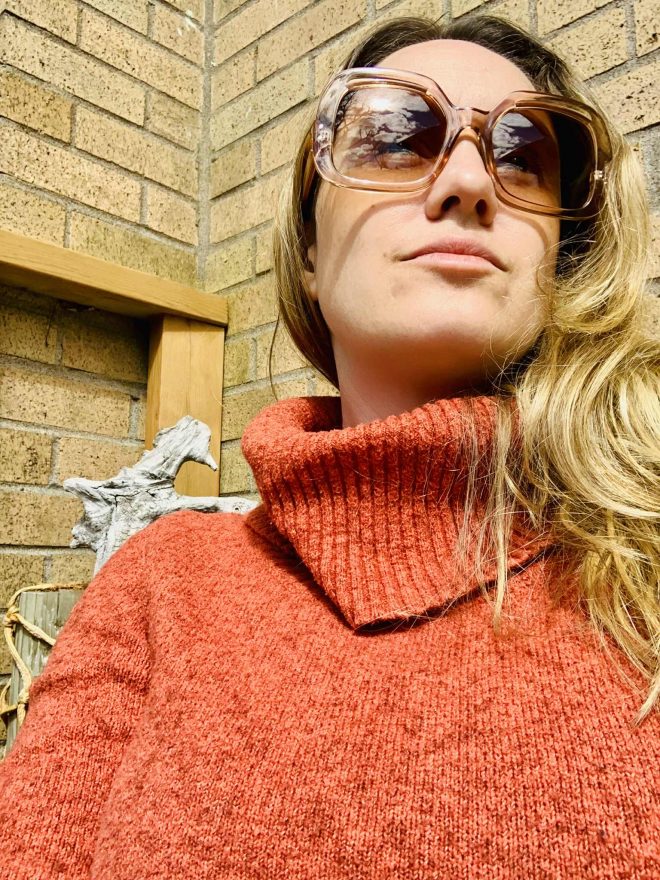
Jeanna Cammarano is best known for wielding a great many pens, some of which happen to create stories. She writes short speculative fiction often about witches or ghosts, or witchy ghosts, among other things. She’s also an assistant editor for Flash Fiction Online and in a past life made video games.
You can find her work in the video game Wildstar, and other games. Her is fiction linked at wordrat on Bluesky.
Jeanna lives in Nova Scotia, Canada with her family, and when she’s not writing or editing, she homeschools a wild child who may or may not be a forest creature.
RJ Aurand
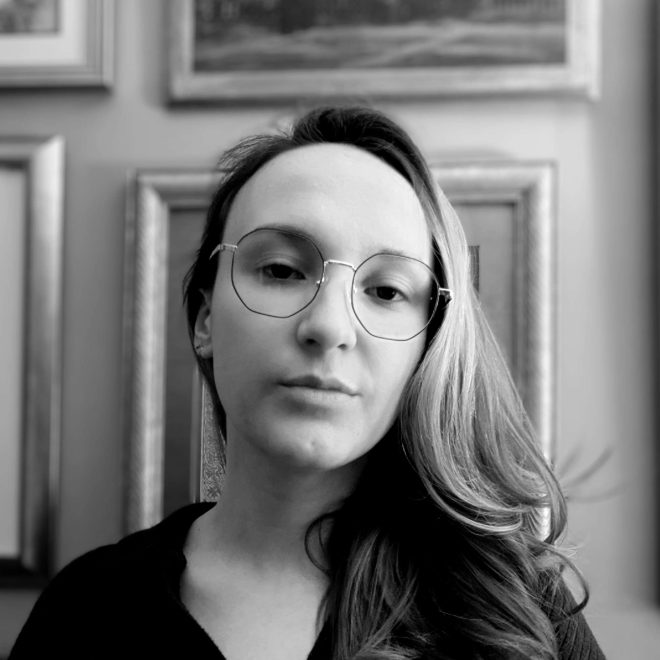
RJ Aurand is a southern Appalachian writer and Rhysling-nominated poet whose work has appeared in The Deadlands, Inner Worlds, Small Wonders, and others. Connect on Bluesky @rjaurand.bsky.social or at rjaurand.com.
Gregory Marlow

Gregory Marlow teaches animation at East Tennessee State University and works as a contract animator for various animation and game studios. Sometimes he also writes stories about robots, unicorns, and/or teleporters. His stories have appeared in Strange Horizons, Every Day Fiction, and the LeVar Burton Reads podcast. He lives in East Tennessee with his lovely wife, Amanda, and adorable dog, Sadie.
About the Narrators
Rosie Sentman
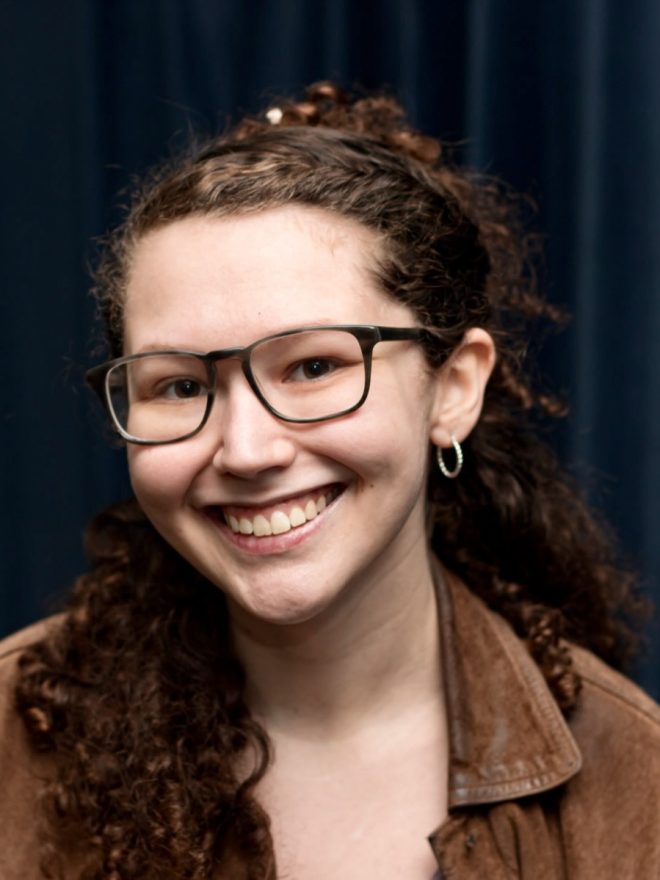
Rosie Sentman is an actor, voice actor, singer, and all around ‘theatre artist’, originally from Georgia and now living in Boston, Massachusetts. You can find more about their projects and contact them at rosiesentman.com.
Karen Menzel (née Bovenmyer)

Karen Menzel (née Bovenmyer) earned an MFA in Creative Writing: Popular Fiction from the University of Southern Maine. She teaches and mentors students at Iowa State University and Western Technical College. She is the 2016 recipient of the Horror Writers Association Mary Wollstonecraft Shelley Scholarship. Her poems, short stories and novellas appear in more than 40 publications and her first novel, SWIFT FOR THE SUN, debuted from Dreamspinner Press in 2017.
Dani Daly

