

PodCastle 943: At Death’s Door
Show Notes
Rated PG-13
At Death’s Door
by T. R. Steele
Here are my instructions for passing through death’s door:
1. Trap one of Them, one who crosses in and out of the realm of death, and steal her name by any means necessary.
A. This is not entirely the first step, but I want to get to the point. In reality, first, you need to find the door. My advice is to find it in childhood. Like most doors that aren’t doors, it moves frequently, but is most often caught in the roots of old, old trees. Usually the tree has survived some sort of deforestation or upheaval; in my case, it was an ancient oak in the suburban sprawl, caged on all sides by duplexes and public parks. Me? I wasn’t sure what the door was when I first found it; an impossible shadow, shifting at the roots even when the sun was blocked by clouds. But after I followed the owls and bats and foxes through the woods and watched as they slipped into the gloom underneath, I knew: it led somewhere. Somewhere else.
B. You’ll notice I mentioned owls, bats, and foxes, but there were also snakes, toads, squirrels, rabbits, and even moths on occasion. They weren’t normal animals, but Others wearing their skin. I learned quickly they could not be lured with cubes of cheese, strips of raw meat, or dog kibble like real animals. These ones responded to bowls of cream, a lock of hair, a trickle of blood. These Others wanted offerings.
C. I trapped many over the years and learned what I could from them. The birds are the most verbose, save the owls; I’ll get to that. The snakes say nothing. The Others may respond to riddles, bargains, kindness, or cruelty, depending on your approach. But if you’re new to this, as I expect you are if you’re reading this, I would start small. Catch something with your bare hands and learn what you can from it. Look for the moths that fly straight. Find the toads that don’t linger. You’ll know.
D. Oh, and I won’t be sharing my means of name-theft here. That’s for you to discover for yourself. But here’s a hint: if you could ask someone only one question about who they were, and it can’t be asking after their name, then what would you ask? Again, after a time, you’ll know. You’ll have always known.
2. Once you have her name, don’t give it back, and don’t give her any others, especially your own. Any name is liable to be snatched back and claimed by her, and then she’ll have all her strength again; no chain can hold her then. Never speak a name in her presence.
A. In my example, I’ll be referring to the captured one of Them in the shape of a barn owl. It was unfortunate she was in owl-shape at the time I caught her; as I mentioned, songbirds talk, but owls don’t. It was particularly difficult to extract her name, but I’ve been doing this for a long time.
3. She will resist. She will not want to lead you through the door and into the other world. She may try to slash at you with beak and talon, even as you offer her sustenance to keep her alive in this shape, in this world. She will shit, like an owl. She will screech, like an owl. She will also feign indifference like one of Them, insult you like one of Them, and try to bargain with you like one of Them. Stand firm.
You need to break her resolve. You can do that, because you are human, and she is not.
A. This step can take upwards of several months, if not years. I’ve heard that those in turtle-shape and moth-shape are particularly challenging for opposite reasons. I managed to get her to concede in a season. One long, arduous summer. I think she smelled autumn on the air, when the door’s presence grows in strength, as all the world around it dies back.
B. At this point you might think I’m cruel. Sure, the owl wasn’t looking well. She was thin. Her eyes were dull. She barely lifted her head from her roosting position when I came to see her. The chain around her ankle didn’t allow her to fly more than a few feet off the ground. She could reach the lowest beam on the already low ceiling in the barn’s loft, and that was all. Her shit and pellets were everywhere. I pitied her, but to a point. This was her fault. If she would only agree to lead me to, and through, the door — well, she could have ended her imprisonment weeks ago.
C. Remember, she wasn’t a real owl. She only wore the skin of one.
4. Once she agrees to take you to — and through, don’t forget to specify that — the door in exchange for her name, do not celebrate. It is not over yet. She may try and trick her way out of it. She may try to harm you. She may call for help. But as she is in the shape of a weakened animal, you have less to worry about. Less, not nothing; remain alert.
A. Put a bag over her head, or stuff her whole body in a bag if it is small enough. I chose the former; I wanted to give her room to move those disused muscles. As I said, I’m not cruel.
B. Have you ever seen a barn owl walk? You may think the sight might make you laugh, those ethereal birds, grounded. It’s not funny. It’s like death stalking toward you on pale legs.
C. Anyway, be on your guard right until you arrive. I would recommend making the trek at twilight, or just before. Avoid sunset and definitely avoid dawn. I learned about dawn the hard way.
5. At this point, you should be at death’s door. Like I mentioned in Step 1, it will most often look like a shifting mass of shadows framed by something: roots, stones, shivering reeds. In this step, aim to be sure it is death’s door (and not some other door; again, they can move) by asking your captive. At this point, she should be able to taste her name on your breath and will be eager and willing to tell you what you want to hear, so be careful. If she seems resigned in her answer, it is very likely death’s door.
A. You can always ask her to step through it (hold tight to the chain, or rope, or leash, or whatever tethers her to you). If the shadows swallow her, it’s death’s door. If there’s light or a strange music, it is not. Do not enter there. Pull her out and try again.
6. Here is the hardest part: stepping through.
A. Yes, even for me. I wanted to die before I found the door, before I even fully understood what it was to want to die. But I chose the door because it was familiar to me. As I said: I found it in childhood. Maybe you did, too.
B. Also: I don’t recommend holding your breath as you step through.
7. Step through.
8. Now you should be on the other side. The owl will not be an owl anymore, but she’ll still be attached to the length of old bike chain if, like me, you kept your captive in a rotting barn-turned-charnel house to the skeletons of bikes abandoned inside. Do not let go of the chain, no matter what shape she is now. You still need her to guide you a little further.
A. The Other I had caught was in her true form, then, tall and sharp and moon-faced, like the owl she wore. But that was where the similarities ended.
9. Tell her you’ll give her back her name once she has led you to your death. At this point, she should agree without hesitation; she will feel her name thrumming in your blood, close to the surface.
A. You will not die instantly upon passing through the door. You’re mortal and stuck firmly in life until you are not. You can thank me for this: it took me years to understand, to make sense of the many and myriad stories that were said to only be stories. There are a few that are written accounts of passing through the door and then quickly ducking back out before the author found their death. You’ve certainly read at least one in your time.
10. Don’t look back.
A. Look around. The other side is beautiful. For me, it looked like the same woodland we had just been in; that stopped me for a moment. I saw trees I knew; I saw the distant glow of windows, lit against the dark. I heard the rush of cars on a wet road. Everything was awash in moonlight, even though the sky had been tinged with pink when I stepped through the door. It was sharper, the shadows more defined, and I smelled a bonfire on the air. Not any bonfire, no, but the bonfire I sat before many years ago when I was whole, for a time. Something in me wanted to turn around, but I didn’t.
Not then.
11. Follow in the Other’s footsteps when she sets off. Don’t stray. Hold tight to her tether. Ignore any shadows that draw near, sniffing. Don’t utter a sound. She will be growing irritated; she wants her name very badly now, more than she wants to harm you. She knows if you die before you give it back to her, she will never have it again.
A. You may be led down a path you recognize. We followed the same path I had found when I was very young, lined by dogwood and wild raspberry. It was the same path I would play on for years, running to the trees after the final bell rang, with school friends who came and went; the dogwood our tower, the raspberries our thorns. Someone would be the princess. Someone would be the dragon. Someone would be the knight. Fight, slay, rescue, repeat. Shades in the shape of those times teased at the corners of my eyes, but when I turned to look, they were gone.
As I said, don’t look back.
12. When you reach your death, you will know it. She’ll say she has fulfilled her part of the deal, and will tilt her head expectantly, her beetle-black eyes boring into yours, waiting for her name to be uttered. Wait a moment. Take in your death.
A. You may be startled by what you see. It may not be what you expect. I was looking at my own form, naked, fetal, lying in what looked like a patch of melting snow. Crocuses and aconite pushed through the snow, reaching for a non-existent sun. It looked peaceful. It looked horrible. I wanted to reach out and shake my own shoulder, see the shade of me blink open closed eyes. But the Other one gripped my shoulder, held me back.
Do not wake the sleeping, she said, or something akin to it. My heart was in my ears as she spoke her warning: Unless you are in the same dream.
B. No matter what it is you see, steel yourself. The next step is one of the more tenuous.
13. Utter her name.
A. Or, in my case, utter your own, but again, I don’t recommend this. The sight of my death had it bubbling up in me, and caught in her grip, I saw the blue-tinged lips and the skin burned by the cold. I was in and outside of myself all at once.
And then, my death moved.
A twitch around the eyes. I called out, unable to swallow it; my own name, acid on my tongue.
This, I realized, was not my first mistake.
B. Let her have it. You have no choice. Watch as she swoops in and catches the name in her talons like the owl-shape she favours. Watch as it disappears down her gullet. Watch as she turns her long, long neck around to look at you, sated, back in her power. She will do something with her face that registers as a smile, but then her mouth will split, far too widely, become a red hollow that could swallow you whole. You will be looking into that void, dumbstruck, as her cloak fans out behind her like wings and she beats them, once, twice, ready to strike, and in your animal heart all you can feel is the need to run.
C. So run. If you, like me, found the door in childhood and its realm is made out of childhood’s memories, your feet will know the paths despite the fear suffocating your mind. You might leap through dogwood and tear through raspberries. You might see the shadows of your friends folding in alongside you, running, too, the sound of their sandalled or sneakered feet on the well-trodden earth filling your ears, reminding you of the games of horses and wolves you used to play. You might hear their laughter, laughter you haven’t heard in over a decade, maybe two, and it will course through your veins like fire. You will remember, then, feeling life beyond life when you were in the woods and you were free to run and climb and fall and come home scratched and bruised and smiling before the weight of your own life crushed you yet again.
You might remember how it feels to be alive, even there, in the realm of death. You just might.
14. Go to your death.
A. This is one option. Read on if you want another. I understand if you do; I often did, too, even when I was this close.
15. Again, you may have run, and kept running, even after the Other in the owl-creature shape stopped chasing you, the beating of her wings replaced by the beating of your heart. You may have run back to the oak and thrown yourself at its roots, shaking but clear-eyed, fingers grasping for the heat of the soil at the base of the door in this place of perpetual late-spring cold. You may have found the edge of the door and scrabbled like a dog in the dirt, digging your way out of your enclosure, and slip through the door. Get out by any means necessary.
A. I actually don’t recommend this. I would find a rock for smashing or a large branch for leverage, as growing your fingernails back to full-form will be another trial.
16. Once you are back on the other side of the other side, you can close the door behind you. No need to harm the tree; you might, somehow, still be holding the chain, though it’ll be shorter than you remember, snapped by the Other on her end. Find a branch, wrap the chain around the end of it in a flurry, and smash the shadows like glass, though they will not shatter; they will disperse like mist in a sunbeam.
A. When the door is shut, you might want to collapse in the dead leaves at the base of the oak and catch your breath. When your heart slows and your mind remembers itself, you will realize that you are now nameless and deathless. The world may be open to you now in a way it was never open to you before, if you have followed all of my steps up until this point.
17. Get up. Find your footing. Use the tree for leverage, if you need to. Your name won’t be in your marrow anymore; it may be hard to ground yourself. Don’t worry too much. You’ll have time now to find a new one. But first, follow the final step closely.
18. Find a new door.
A. Hint: the world is full of them.
Host Commentary
…aaaaand welcome back. That was “At Death’s Door” by T. R. Steele, and his first story at an Escape Artists cast; welcome, T.R.! For a convenient list of links to other stories, including some in audio at Tales to Terrify, head to his website at authortrsteele.wordpress.com/publications/; for a convenient way to find out when more are published, follow him on Bluesky at @authortrsteele.bsky.social
T. R. sent us these notes on today’s story: This story draws inspiration from my childhood, when I experienced periods of “not wanting to exist” that I would later understand to be a form of suicidal ideation. I spent a lot of time seeking solace in the woods near my childhood home, imagining other worlds and observing the birds, animals and plants that made their homes there. I’ve dealt with depression for decades now, and while it has made my life incredibly difficult at times, I love my life (and this world) very much! Without meaning to sound trite, it is full of wonder, possibility, and open doors. Though “At Death’s Door” is certainly grim and a little scary, I hope I have captured that feeling in this story.
Thank you, T. R., for the story, and especially the honesty and vulnerability of that context.
This is, I think, a hugely important story, on a topic rarely touched on, in part because it is difficult to do well, to do responsibly. I do not think anyone who has not experienced suicidal ideation could have done it; perhaps should have done it.
We are, mercifully, past the peak of the pearl-clutching, hair-tearing “but I should be able to write whatever I want!” bedshitting of a few years ago, when it was suggested that e.g. Black people are best placed to write Black stories, rather than that slot being taken up by a well-meaning white person—because publishing, frustratingly, does still see stories reflecting non-white, non-mainstream perspectives as having “slots”, and is averse to publishing “too many” of any such in a year, evidently oblivious to the double standard with, y’know, all the usual white, abled, cishet, Anglo-centric narratives seen as a neutral default. I digress: the point is, and always was, that it’s not about what you are or are not allowed to write—no-one can actually stop you, after all—but about acknowledging the responsibility of being an author.
Today’s story was, I felt, responsible with its topic, in a way that many tellings would not be.
All this throat-clearing on my part is because I feel that responsibility, too. It is a delicate topic to discuss, with the appropriate weight and consideration it deserves, to acknowledge it without condoning it, to witness and understand the very real feeling whilst also saying, in the strongest possible terms, that the world is undoubtedly and always better with you in it. All of you. Especially you.
And I say that, and mean that, because each of us is a unique tapestry of experiences and perspectives and ideas and potential. The world is, almost by definition, the richer for having as many such tapestries in it as possible, in the same way that, to close a circle, publishing is richer for having a greater diversity of staff and stories.
Time is a river that flows only downhill; the moments that made you will never recur; there will never be another like you again.
I, also, had moments of not wanting to exist when I was younger. I remember coming home from school some days, maybe ten years old, so overflowing with sheer frustration at being me, at the inevitability and inescapability of being me, who did not fit and did not understand why and could not even start to grasp the reasons behind that, could not even visualise the climb towards comprehension to take the first fingerhold, that I would sit on the kitchen floor and put my hands around my own neck and squeeze.
As Stephen Fry said in a recent interview—on The Assembly, broadcast on ITV in the UK—he was in agony in his mind when he tried to kill himself, but he can’t now bring back that feeling: like having had a broken leg, “you know that you screamed in agony, but you can’t make that pain come back to you now”.
I’m pretty certain I’ve spoken before about my atheism: that there is, to my mind, no world and no life but this; and that once these four-score years are up, five ten-millionths of one percent of the lifespan of the universe so far, that is it; and there is no more, and I will perceive and understand nothing else of what unfolds after me. That realisation, that I clearly remember striking me deep down one night as I lay in bed about fifteen, has meant that I have never seriously contemplated suicide since, no matter how dire my mental health. The finality of it, the end of existence, feels to me far more dramatic and unconscionable than the mere threat of eternal damnation promised by Catholicism, for example. The end of perception, of the self. Can you imagine? No, of course not: none of us can, when every one of our thoughts and experiences are otherwise filtered through the ineluctable lens of being yourself.
There is so much life, and so much world, to see and know and love. As an atheist I do not, of course, think there is a meaning of life handed down to us from on high, a path we are meant to tread: nevertheless, I think the primary moral precept of our existence is to leave everywhere we go and everywhere we are a little better than we found it; and I think the primary purpose of life for each of us is collecting experiences, and perspectives, and understanding. (These two points are, I suspect, the same point seen through different facets.)
To live is to see. To see is why we must live. There is more to see on even this one small world than any one lifetime could contain. We should live as long, and as fully, as possible, to know the world as best we can; because to know a thing fully is, inevitably, to love a thing, and the world could always do with more love in it.
There is, I think, another reading of today’s story, one that the choice of narrator supports, though I don’t know if that was intentional from our glorious co-editors. Our protagonist leaves their name behind, and stands, having passed through a binary of life and death, holding a broken chain. They set out to find new doors in a world full of them, portals they didn’t know were there before, could not see. They set out to find their new name, which in many respects is a new definition of self.
The prejudice against trans folk leaves many with fragile mental health, and far more vulnerable to suicidal ideation than they might otherwise be. One awful, heartbreaking statistic I saw recently was that simply using a trans kids’ chosen name in only one additional context, like home or school, predicted a 56% decrease in suicidal behaviour. In one way, the most obvious way, that is a result worth celebrating, because it is such a simple act of support and so astonishingly effective. In another way, though, it is incredibly upsetting, because there are people actively and angrily unwilling to make even that small accommodation, despite its simplicity, despite how much it hurts to deny even that accommodation.
But in my experience, there are few people in this world who know themselves as well, or who are as open to the world and its possibilities, as much as trans folk. I am, frankly, envious of anyone who can know themself so surely.
And for this reading of the story, this line in particular gives me goosebumps: The world may be open to you now in a way it was never open to you before.
Having talked about responsibility earlier, it is a necessary responsibility as host of this story to signpost you towards support if you are suffering with suicidal ideation. You can find a list of suicide prevention helplines for every country on Earth on, of all places, Wikipedia, under the topic List of suicide crisis lines. If you are currently struggling with these thoughts, or with the conviction that the world would be a better place without you, please, I repeat, you are wrong: the world is undoubtedly improved with you in it; people want and need you more than you can understand right now; and you can heal from this place. Please look up the numbers for your country and reach out to one of them to talk it through, because talking to each other can get us through anything, and there are people out there who not only can help you, but want to help you. Please give them that chance.
About the Author
T. R. Steele
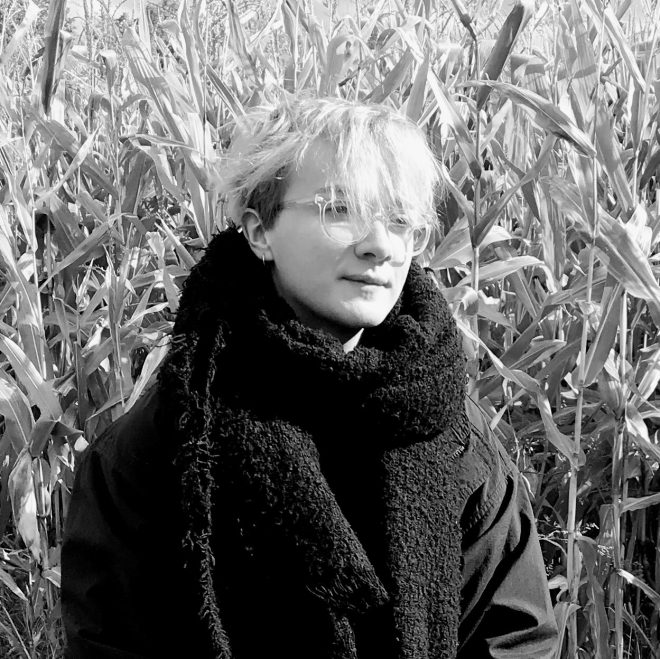
T. R. Steele is an author of fantasy and gothic fiction living and writing in Toronto. He shares his home with a cat, a blue-tongued skink, several houseplants, and an expansive library of plant and animal reference books. His work has appeared or is forthcoming in A Coup of Owls Press, Hearth Stories Magazine, Tales to Terrify, Plott Hound Magazine, The Sprawl Mag, smoke and mold, and Heartlines Spec.
About the Narrator
Jordan Kurella

Jordan Kurella is a trans and disabled author who has lived all over the world (including Moscow and Manhattan). In his past lives, he was a photographer, radio DJ, and social worker. His work has been nominated for the Nebula Award, the Sturgeon Award, and the LA Times Book Prize. He is the author of the fantasy novella, I NEVER LIKED YOU ANYWAY, the short story collection, WHEN I WAS LOST, and the climate fiction novella, THE DEATH OF MOUNTAINS. Jordan lives in limbo with his perfect dog and practical cat.
