

PodCastle 961: A Thousand Finer Foldings
Show Notes
Rated PG
A Thousand Finer Foldings
By Claire Jia-Wen
1.
Phoebe’s mom calls her while she’s in the self-checkout line at Safeway. “I’ve found a solution for your apartment problem,” Mama says.
“I told you, I’ll just commute to San Francisco on the weekends,” Phoebe replies, stepping out of the warpath of a kid barreling a shopping cart towards the snack aisle.
“Aiyah, San Francisco is so far from Berkeley —”
“It’s not really —”
“Anyway, Sagan Liang is renting an apartment in San Francisco and he doesn’t need it on the weekends. I already talked to his mom, she said you can stay there then.”
Sagan and Phoebe’s mothers go to the same church and play pickleball together three days a week. Sagan and Phoebe don’t really talk anymore. “And what did Sagan say?”
“He listens to his mother. You should listen to your mother more. The Liangs won’t even ask for money. He makes so much money now, not like you. You could still go to medical school like him if you wanted.”
Phoebe sets her basket next to the checkout. “Sure.”
“Let me and Baba know if you ever need more money, we can send you more.”
She scans a bag of grapes. Ten dollars. She weighs the cost benefit analysis of spending ten dollars for a bag of grapes. Ten dollars is not insubstantial against her PhD stipend.
Phoebe’s first instinct is to reject Mama’s offer. Pettily, Phoebe would prefer not to reward her for her gossiping and meddling — she told Mama to stay out of it, she could handle commuting three days for her part time internship at the Numan Lab — but having access to a kitchen will save her the trouble of buying food, and getting to stay in the city overnight will save on BART costs. It’s an appealing idea.
The only problem is, of course, Sagan. It’s not that Phoebe and Sagan have any bad blood. She has fond memories of hunching around a long table with the Science Olympiad team, Sagan doing the bio events and Phoebe doing the physics. It’s just that for a strange, half-remembered stretch of high school, Phoebe Chen was a little in love with Sagan Liang.
But it’s not as if she’ll ever see him, with this arrangement.
“I’ll think about it,” she says, tapping her rewards barcode to the scanner. She’s saved four dollars and fifty two cents. Then it occurs to her: “Where is Sagan planning to be on the weekends? Why does he just have an empty apartment?”
Mama’s voice is somber. “His gū gu is at the Stanford hospital all the time,” she says. “She’s dying. Poor boy.”
7.
“Of course she can stay,” Sagan says when his mother calls. He has her on speakerphone. His neurosurgeon’s hands are creasing origami paper with desperate energy.
“That’s good. I told them yes,” his mother says, and he sighs before making the final fold in the origami crane.
Already, there are seven scattered across the dining table, intermittent stragglers among the miscellaneous graham cracker packs and the board game still in its original plastic wrapping. Sagan is too old to believe that folding a thousand of them will take the tumor out of Gū gu’s lung, but it gives him something to want. Sometimes he thinks he has been walking in circles for the last ten years.
“Are you eating well?” she continues, oblivious to his contemplation. “You should eat more vegetables. You know, if your aunt had eaten more, she wouldn’t be at the hospital right now.”
“Mom,” Sagan says, and cuts himself trying to unpeel another sheaf of paper.
23.
It surprises Phoebe how ordinary the apartment is. A one-bedroom in the Mission, not cheap but also not one of the complexes armed with a concierge and communal fridges you need an app to unlock. Sagan’s father is a businessman who moved his family to America when Sagan was young and divorced his wife once Sagan graduated high school. Phoebe remembers their house as well maintained from the study sessions he hosted.
She lifts the doormat, finds the key beneath, and lets herself in to find an assortment of library books splayed across a slightly crooked shelf, and a couch that’s clearly secondhand, cracked and worn. Something in her chest squeezes at the sight of the paper cranes populating the table, miniature boats against a sea of wood.
“You know I never learned to fold a paper crane?” she had said to Sagan, once. They were sitting on camping chairs in between Science Olympiad events. Her foot tapped incessantly. “And it feels like one of those things you can only learn when you’re like, six. Like those fortune tellers you stick your fingers in.”
Phoebe was one of two freshmen on the team. Sagan was the junior captain, the smartest one on the team, and had been the first to speak to her as she hovered at the edges of the first team meeting.
“I mean, I don’t know either,” Sagan said. “We could learn. Do you want to?”
She had. Of course she had. She wanted to know how to fold cranes and she wanted to spend time with Sagan Liang. Phoebe had wanted to be friends with Sagan before she knew him. Sagan could fold a crane, and coax it to flutter its wings with only an encouraging word. When his event was called, the cranes settled back into stillness.
Beside the paper cranes in Sagan’s apartment now, there’s a note. Phoebe recognizes Sagan’s sprawl loping across origami paper.
It’s a list of local restaurant recommendations. He’s underlined a place called El Taq and written make sure you don’t leave the Mission without trying the Mission Burrito!
Phoebe huffs a laugh.
She has a lot of work to do. Her friends had exchanged worried looks when she mentioned her advisor said she should take the part time internship at the Numan Lab because she would need a more prestigious industry recommender if she wanted to go on the job market next year. Phoebe is already on four active projects. Sometimes she feels like she is standing in a collapsing sandpit and if she stops shoveling sand for a breath, too much sand will pour in for her to ever dig herself out.
Still, she can’t resist. She takes a photo of the note for future reference, though she’s sure she won’t be eating out much, and folds the note into a crane. Her fingers still remember the steps.
24.
What’s the point of having hands that can thread a catheter through the grey matter, Sagan thinks, if they’re useless now?
He is at Gū gu’s bedside in her Sunnyvale apartment. He doesn’t know what to do with his hands. He flicks his earbuds case open and closed. He wishes he had brought origami paper.
In the other room, the caretaker is cleaning, the floors creaking as she moves from one end of the room to the other. It is the caretaker who accompanies Gū gu to the hospital for the treatments the doctors are saying have a low chance of success. Sagan doesn’t know why he can’t go too. He spends sixty hours a week in a hospital. Why is he scared of the one that matters most?
“Sagan,” Gū gu says, stirring awake. She mispronounces his name in her cracking voice.
Once, she was warmth and assurance, showing Sagan how to move his wrist to spin the yo-yo. Pull one side more than the other, it’s like a riddle, it only stays balanced if you are unbalanced. Now it is as if someone has stuck a pipe into her skin, vacuumed out all the blood and flesh. Her skin is like paper. Sagan’s father is paying for her treatments but hasn’t visited himself.
Sagan has spent enough time in other hospitals not to flinch when she coughs. She has smoked as long as Sagan knew her. He used to show her his DARE brochures, used to talk about gateway drugs and carcinogens, which made her chuckle. She said he should give that speech back in Yangzhou.
“Are you all right?” Sagan says. “Do you want more water?”
She clasps a hand over his with a surprisingly strong grip. “Stop making that noise,” she says. “I can’t sleep.”
Gū gu slumped against the pillows again by the time Sagan manages, “Sorry.”
He takes the Caltrain back to San Francisco that night. As they rumble through the south bay, he realizes he didn’t wipe down the counters of his apartment before he left, and that this is something people are supposed to do. He had folded the clothes that had been piling on his bed and frantically vacuumed the floors in preparation for Phoebe’s stay, but the unwiped counters have become so normal to be invisible.
They’re gleaming when he lets himself back into his apartment. Sagan feels a flush of shame. It’s intimately humiliating, to be seen beneath the mask of normalcy, like kissing someone, only to have them slip a hand beneath his shirt and feel a puckered scar gaping across his chest.
And for it to be Phoebe Chen, too.
In the kitchen, frozen meal boxes sit at the bottom of the trash cans. In the bedroom, the sheets have been washed, the blankets folded at the foot of the bed. Sagan strips his jacket and pants off and collapses into bed. He’ll take a shower in the morning. How can sitting on trains be almost as exhausting as standing in operating rooms?
As he falls asleep — sleep, blessed relief from having to worry about Gū gu and having to worry about waking up at all — Sagan wonders if he is sleeping in the indent Phoebe left. He wonders if she uses the same honey scented shampoo as she did before. He wakes up, showers, and takes the Muni to work.
Sagan spends so much time wanting things not to happen. He doesn’t want to get a call from the caretaker. He doesn’t want an aneurysmal perforation. He folds his paper cranes, and that’s the closest he gets to encroaching upon an ending. Coming to the end of the week, he usually thinks about how he’s lived five days blurred into one. He did his undergrad at MIT, med school at Penn, residency in rural Arkansas, and is now a neurosurgeon at UC San Francisco. He does not know anybody in this city and is tired of starting over.
This Friday, though, a paper crane flutters up to him as he is putting on his shoes. Worn-in sneakers, for the train ride down. He’s wiped down the counters. The crane perches upon his shoe rack. There is the sound of creasing and uncreasing as it flutters.
Sagan recognizes his own handwriting in its folds. He doesn’t remember folding paper with his own handwriting.
Phoebe, then.
The crane hops forward with some of her inquisitiveness, tilting its head to the side. It has no eyes, but Sagan is certain it is watching him. It seems expectant.
Can you heal my aunt he wants to say. But it’s bad luck to ask for miracles.
Sagan thinks about the frozen meals in the trash can. He says, “Can you get Phoebe a Mission burrito, when she gets here?” He pulls a twenty from his wallet. “Use the leftovers for tip.”
94.
It’s strange, living around the absences of another person.
Some weeks, Phoebe finds the steamer in the dishwasher and that is how she knows Sagan must have made soup dumplings. She enjoys watching the promotional State Farm bookmarks get closer to the ends of library books before they are replaced by the next ones Sagan borrows. She thinks about getting her own card with the SFPL. She asks the paper cranes to wipe down the counters on the weekdays, when she’s not here.
She still hasn’t sorted through the complication of feelings that warm when she sees the paper cranes at her windowsill, carrying tinfoil-wrapped burritos as big as her head or takeout boxes of charsiu over rice. She knows Sagan is doing this because their mothers are friends. She has taken enough sociology classes to know poverty is not a personal flaw.
Still, the butterflies. Still, the shame.
“You basically live around each other, don’t you?” her friend Marissa says. “Like complementary halves.”
“I guess,” Phoebe says, rubbing her eyes.
It isn’t so different from how they have lived for seven years, is it? One day, Sagan and Phoebe were friends who folded paper cranes before their Science Olympiad events and made Shin ramen at one in the morning. Then they were two people who were not on the same team and not at the same school. How many friendships fall apart for those same reasons?
“Hey, don’t you think you should slow down with the coffee?” Marissa says. “Isn’t that your fourth one today?”
Fifth, but Phoebe doesn’t tell her that. She thinks again about drowning in sand. She takes another sip.
Back in Sagan’s apartment, Phoebe debugs code and edits Overleaf documents and folds paper cranes instead of curling in a ball and crying. The dining table has turned into a field of cranes, with a small space cleared at the end to take meals at. She calls her mother on Sunday mornings and tells her about how well her weeks have been going.
“His gū gu is going to die,” her mother says. “You should get him flowers.”
“That’s a romantic thing in America, Mom,” Phoebe says. She can’t imagine his grief. But yes, she has been living in his apartment and should do something for him. She just doesn’t want to verbally agree with her mother. “And he doesn’t like flowers, anyway.”
“Still. You don’t want to be ungrateful, do you?”
327.
“How ungrateful you are,” Gū gu says, when Sagan visits her. “You can’t even go with your aunt to the hospital.”
Sagan wants to tell her that it’s hard for him. He doesn’t tell her, because she is the one dying and he is the one who can’t even make it a bit easier for her. He wishes Gū gu could die more elegantly, like those heroines who are gracious even as they cough up blood on their deathbeds.
“I’m sorry,” he says.
“You and your father both. You think love can be replaced by spending money. When you should be spending time instead.”
I come down every weekend Sagan wants to say. I’m tired of the view out of the window.
“I’m sorry.”
“Do you think two words are enough?”
He lets her have the last word. Her condition is worsening. They might not have many arguments left for her to win.
On the ride up, his thoughts turn to the woman who must now be in his apartment, packing her things. She left a toothbrush, once. It made his head cock to the side, the evidence that she too is fallible.
He has always admired Phoebe. He admired her pragmatism, in high school. The way she buried her personality to be taken seriously as the youngest on the team. He hadn’t known she could laugh until her second year, as they deliriously stirred Shin ramen the night before a meet. He wished others could be as serious as her.
Then he admired her conviction, after they stopped knowing each other. He hadn’t known PhDs were something people actually did.
Sagan loves biology. The natural end to that was medical school. He had never considered that he might have turned out differently, that other paths had been deliberately obscured from him like the blinders of a horse removing its peripheral vision, until he was catching up with a hometown friend. They mentioned offhandedly that their school had gotten a string of kids into Berkeley recently — Harriet, Benny, Phoebe.
Sagan had been delighted for her. He had been jealous of her.
When Sagan enters his apartment, there are flowers. They emerge from the far wall, tangling with each other, hanging like the fake ivy his female friends would use to decorate their college dorms. They’re real, though.
Sagan did the botany events for the team, so many years ago. Knowing the names of flowers is a cool party trick. He can name all of them now. Hydrangea, clematis, heliotrope, spearmint, forget-me-not. He runs a finger along the places they root into the walls. There is no evidence of force. It is as if the wall simply opened to let them through. The cranes, coaxed to life, now capable of creating life in turn.
He cuts a straight-backed orchid, and brings it to Gū gu the next week.
“Of course you only bring me flowers after I reprimand you,” she says.
“Do you like it?”
“Set it on the nightstand.” She is overcome by another hacking cough. She is thinner every time Sagan sees her.
“I’ve always liked flowers, even before I studied them for Science Olympiad,” he offers up. “When I was young, I wanted to have a garden.”
Gū gu’s eyes flutter closed. “Yes,” she murmurs. “Yes, I remember you told me. When we were by the river, with the yo-yos. I thought you’d have one by now.”
510.
The flowers grow. The cranes multiply. Phoebe keeps telling herself she’s fine.
She barely notices it, at first. Her hair falling out. She has heard her male friends complain about how much hair their girlfriends shed, and she has been determined not to be the same burden upon Sagan. It’s normal to find a strand of hair on her shirt or on the floor by the bed.
But not, she thinks, this much.
She can’t sit up without picking a strand from her pants. There is always a loose one tickling her arm. It is impossible for her to delude herself into thinking this normal, not when she has been sleeping so little and eating so sporadically.
I’ve done something to myself she thinks.
And then: Oh God, I hope it’s not too late to fix.
She is in Sagan’s apartment when she realizes. She knows she should leave. It’s Sunday night, which she is supposed to spend in her own bed. But she doesn’t want to go and pretend to be normal to her roommate. She doesn’t want to get up and walk five blocks to campus tomorrow. Mostly damningly, she wants to be told everything is going to be okay, and she wants to Sagan to be the one to tell her.
The key turning in the lock.
And here is Sagan Liang in a hoodie with peeling letters, Sagan Liang with his wire-rimmed glasses and acne scars. Phoebe looks at him and thinks with a sudden clarity that she wasn’t in love with him in high school. She wasn’t capable of that depth of feeling, not at sixteen. Not the way she is now.
He visibly startles when he sees her. Then he steps into the apartment, and this space that has only ever held one body is now holding two, and the shock melts into concern. The ease of his concern, the automatic assertion that she is someone whose hurt matters, makes her swallow a sob.
“Phoebe,” Sagan says.
She tries to see herself as he sees her: wild-eyed in his apartment, framed against the daisies and the zinnias and the salvia. A splinter from his old life, digging into the flesh of his new one. But then — she is not sure he could have called the cranes to life through obligation alone. There must have been affection, at least. She doesn’t dare hope for more.
“Can I stay here?” she says. Stupid, she already stays here. What she really means is: would it be too intrusive, if we coexisted, instead of circling each other like some magnetic field is pulling us apart? “Sorry, I meant —”
“Yes,” Sagan says. “Yes, of course you can stay.”
Who have they become? A doctor, a researcher. They are their ancestors’ wildest dreams. Phoebe does not feel like it. She feels very close to collapsing in on herself.
Phoebe hugs her knees to her chest. “Thank you.”
“Take the bed,” he says.
“I can’t do that. It’s your apartment.”
“You should know,” he says with a wry smile, “that my mother raised me too well to let you sleep on the couch.”
“We can both take the bed. It’s a queen bed. It’s not that big of a deal.”
There is the unspoken end to that statement — unless it is. Unless it would mean anything besides the coexistence of two bodies. They’ve been sharing the bed for months now.
“Let me take a shower first,” Sagan murmurs.
His hair is still damp when he climbs carefully beside her, later.
“You’re not going to ask why?” she says in the darkness.
“No,” he replies, and then they are both silent.
791.
Phoebe tells her advisor that she’s slowing down their project for the semester. She asks him if they can meet remotely, and is given the permission to stay in San Francisco, so long as she comes into Berkeley one day of the week.
Sagan comes with her. She insists he doesn’t need to. He insists he’s always wanted to try the sourdough pizza in Berkeley, and they have different flavors every week, and he needs to try them all, doesn’t he?
And Phoebe recognizes the desperate edge to his voice, and she knows that the operation next month might be the one Gū gu does not wake from, and she thinks that maybe he is craving escape too.
They buy half a pizza with green sauce on the side. They eat it at the standing tables beside the street, watching cars go by, listening to undergrads talk about how it’s always midterm season after the first month and cringing at rich Berkeley white people talk about how the city was better thirty years ago. They listen until the streetlights flicker to life and they have to tilt the condiment cups to the side to dip their pizza crusts.
“Do you remember,” Phoebe says, as they walk the twilit campus after, “when we came here for the Golden Gate Invitational?”
“Penelope Lin got so nervous she threw up on your cheat sheet, didn’t she?”
“Yeah.” Phoebe smiles as they pass a group of students log-rolling down a hill. “Do you miss it? It was so simple.”
Sagan thinks about his father and mother just tolerating each other and late nights trying to arrange his passion for biology into an acceptable narrative for admissions officers who don’t think of him as a person. He thinks about pressure cooker metaphors. “I think high school was the worst part of my life. I don’t think I became a person until I left.”
Phoebe fiddles with the seam of her cardigan. “That makes sense.”
“I do miss the people,” Sagan says. “I hate the school but I can’t imagine giving up the people I met there for anything.”
889.
The days tick toward the operation. They try new recipes. Rose tteok-bokki, smash burgers, injera. They go to the south bay on Saturdays, and Phoebe meets Gū gu. They go to Dolores on Sundays and meet new people: an influencer who’s getting paid to try the techbro themed bars popping up, a middle-aged couple who enthusiastically hand them a coupon for a local pottery class, a girl with a wolf cut who works part time as a barista and part time at an indie perfume store. Sagan picks the stray petals from Phoebe’s hair with casual ease now. Her hair is growing back in, and she likes to joke it’s the cranes, and she sometimes think they do have that kind of restorative power. After dinner, they fold paper cranes over their plates.
“You’re much better than I am. It feels unfair,” Phoebe remarks. Her mouth is stained red from the kimchi fried rice. Sagan tries not to look too much.
“Well, I’ve had more practice,” he replies. “I’ve been doing this since I was six. My gū gu taught me.”
She pauses. “I thought you didn’t know how, until we learned together.”
“I was lying, I think.” It’s been so long that he has to dredge up the memory, reconstructing his motives. “I wanted to spend time with you.”
“You rat.”
Phoebe says it without any real heat. Sagan grins at her across the table, but there is a melancholy that cuts the expression. It’s only a few days before preemptive grief becomes just plain grief. No more uncertainty. No more escape.
“She told me,” Sagan says, “that if you folded one thousand, they would grant you a wish.”
992.
That night, as they are curled against each other on the bed, Phoebe says, “I can go to the hospital with you, if you want. For the operation. I don’t know why you’re avoiding it, if you’d be open to going at all, but I can come with, if you are.”
And Sagan — Sagan says, “I’d like that.”
1000.
Sagan and Phoebe are waiting in the receiving room when they get the news. Gū gu will live.
Sagan’s arms are around Phoebe. Sagan is laughing. Sagan is shaking. Phoebe hugs him back. Gū gu will live. Miracles still find people. The world is not ending. It has barely begun.
Host Commentary
…aaaaand welcome back. That was “A Thousand Finer Foldings” by Claire Jia-Wen, and if you enjoyed that then by far the easiest way to find more is to go to her website, clairejiawen.com, and click Work in the menu, and then go read the stories linked there at venues like Clarkesworld, khōréō, Apex and Nightmare—all of which produce podcast episodes of their stories, so you can read them or listen to them, as you prefer. If you want to find out about new stories as they come out, Claire is on Instagram and Bluesky both as @clairejiawen.
So much of this story speaks straight to my heart. The burden of pre-emptive grief, that grows in the heart of your life like a boil that pulls your skin taut and shapes the very way you move through the world, hidden as it may be from the eyes of others: a boil that can only—usually—be lanced with the outcome you dread, so that you both resent it but also cherish it, because as awful as it is to carry around, the alternative is unimaginably worse.
The ways we shape ourselves around others, even when they’re not there, and in which we also shape others without knowing we do, the ripples we leave on the surface without ever seeing which rocks they collide with, which shores they fall upon.
And above all: that we only get through this together. That a problem shared is a problem halved. That no-one is an island, and that nothing ever went away by burying it down and storing it up, and that the only outcome of that path is poison.
That sharing your hurts and hopes and fears is not weakness but vulnerability, which are not at all the same thing. To be vulnerable is, in fact, an expression of incredible strength: none of us get very far in this life without being taken advantage of, or mocked for showing vulnerability, so to keep doing it, to overcome the lessons trauma has taught you and stand up again into that hailstorm rather than hide behind a stoic, silent façade—that is strength. That is courage. Be brave enough to be kind, they say, because kindness is also vulnerability, isn’t it?, to put yourself out there as willing to help others, knowing you might be spurned or exploited.
All the best things in life come from courage. Be brave enough to take that job opportunity; be brave enough to ask that person if they’d like to hang out sometime and see where it might lead; be brave enough to offer help to someone who needs it, and see where that might lead: a new friend, a new understanding, a new version of yourself better than the last.
That transmutation will come slowly, of course: each chance, each bold moment just one fine folding of your character, almost imperceptible alone, until a thousand such foldings have shaped you anew.
None of us are immutable, but forever changing on every level from the cellular to the emotional: and if you are brave enough, you can choose those folds yourself, and become the person you want to see in the world, connected to the people you want, folding cranes—and each other—together.
About the Author
Claire Jia-Wen
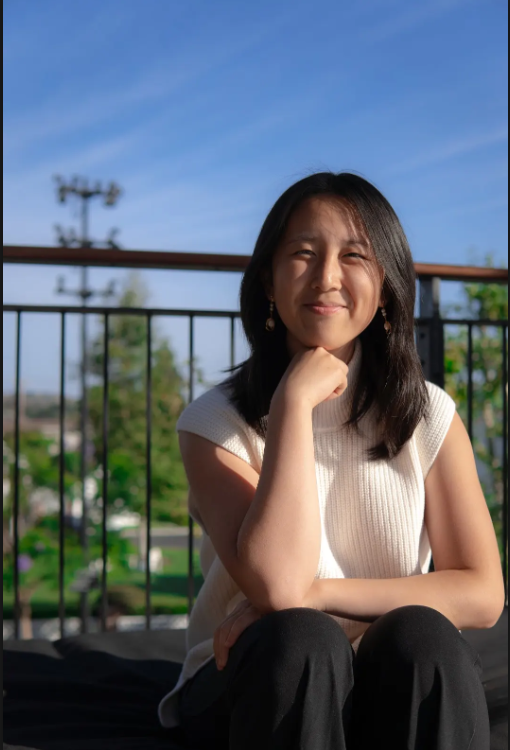
Claire Jia-Wen is a speculative fiction writer originally from the 626 and has work published or forthcoming in khōréō, Clarkesworld, Nightmare, Apex, and more. A Viable Paradise and Clarion alum, she is currently a PhD student studying human-computer interaction. She is represented by Allegra Martschenko at Bookends Literary Agency and can be found at clairejiawen.com
About the Narrator
Rebecca Wei Hsieh

Rebecca Wei Hsieh (she/her) is an actor and writer with a BA in Theatre and Italian Studies from Wesleyan University. She doesn’t particularly enjoy talking about herself in the third person, but does it nonetheless to seem as professional as possible. As part of her attempt to be professional, Rebecca writes for Nerdy POC and Screen Rant, and has written for other publications such as Wanderful and OC87 Recovery Diaries. Rebecca is also a connoisseur of bad puns and a generally awkward queer woman of colour.
