

PodCastle 958: Of Black Town’s Monster by Chaitanya Murali – PART TWO of Two
Show Notes
Rated R
Of Black Town’s Monster
Part Two of Two
Chaitanya Murali
February 16th, 1695
I hurry home, leaving Devyani with the promise of a meeting soon, my heart thumping, my breath heavy from fear. My eyes flit at every small movement in the dark, seeing the wolf’s grin in every shadow. I reach my house and I open the thatch door, but there is no one inside. The house is dark, though not absent of the mild scent of fish that lingers for hours after dinner.
She’s gone looking for me. Again.
I run to the docks, relying on muscle memory to keep me from falling into the surf. The oil lamps have been doused for the night, so the only light here comes from the moon and stars, and the tiny swaying pinpricks of revelry onboard the ships moored in the bay. At least one of those, I know, carries people like me in its belly. And if I’m not careful, something else will be carrying me in its belly tonight.
I find Amma huddled behind a stack of crates, her head peering over top to stare at something in the distance. I kneel next to her, falling back on my haunches when she swings at me in surprise.
“Amma, it’s me!” I whisper, picking myself up from the ground, “What are you doing?”
She hushes me and turns to look over the crates again. Clearly my “disappearance” is not of import anymore.
I join her in looking, my eyes focusing on the blurred outlines of several people shuffling near the waterline twenty feet from us. They have boats, which creak with the muffled weight of boots entering them.
“Who are they?” I ask, though I fear I know the answer.
In response, Amma pulls me away from the crates, my foot bumping painfully into the corner of one. We break into a crouched run towards the tangled grove of huts near ours, and we do not stop to see if the pirates heard our mistake. We do not stop until we have run through every alley in Black Town, until we reach home and throw our own crates and possessions before the door. My heart beats painfully in my throat, gagging me, choking me for my mistake.
Amma recovers before I do.
“We’re really making this a habit,” she says, a chuckle forcing its way through her panting.
They didn’t manage to follow us in the dark. They didn’t know who had seen them. But they existed. Devyani had been right.
And all that meant was that we had to go through with the plan. With the fevered concoction of one mind addled by fear and adrenaline, and another addled by a lifelong hunt.
“What were you doing there?” I ask Amma, “Why were you watching them?”
“I was looking for you!” she replies, indignance taking over from the tired laugh. She wheels on me. “And where were you? Vishnu said you left the docks before midday, and you only come home well past sundown?”
I breathe deep, preparing the lie, but what comes out instead is the truth in all its mad glory. The girl from the stocks, the identity of the man who’d put me there in the first place — who’d hunted me today with murderous intent — and the wall that showed me his plans for the future.
“It sounds mad, I know,” I say at the end of it all.
“So, they were slaves,” Amma says, her voice soft as the Mughal satin that the White people covet.
“The people at the docks just now? They probably were, yes.” A pause. “And their slavers.”
“The men under the command of the one who hit you. The wolf.” Satin turns to steel, folding over itself until its edge is honed sharp enough to sing in the air.
I nod.
She sits back against the far wall of the hut, on top of her thin rajai, and pulls her knees into her chest to rest her head on them. For ten minutes she stays that way, deep in thought.
“This girl, can you show her to me?” she asks, when she comes out of her reverie.
“I’ll ask her. She did seem to want to find more help if she could, so she might not be averse to company.”
Amma nods, as if this is enough for the moment.
“I don’t know what to make of all this, you know,” she says, “It’s…a lot.”
She holds a hand up to cut me off before I can speak.
“But I know that they’re still taking our people as slaves — just as they did to Appa. And if you and this girl are planning to oppose that, then I will help in every way I can.”
My heart swells. I had expected her to kill the idea, tell us to keep our heads low and to avoid angering the British. But it seems that selling one’s spouse into slavery and beating their child into submission will turn even mild souls to rebellion.
“What do you want to do?” she asks.
I tell her.
February 18th, 1695
“You told your mother.” Devyani paces, torchlight casting her shadow over the winding images of Avery’s triumph on the wall behind her. It looks like waves, rising and falling against the hulls of the battleships.
“She saw them taking the slaves out to the ship. I couldn’t really lie to her after that,” I say.
“Where is she now?”
“She’ll be here soon, had to finish her work in White Town to avoid suspicion.”
She arrives an hour later, forcing one last piece of white coconut meat into her mouth as she enters the cave, and then wiping her hands on her saree.
“You’re thinking too small,” Amma says, once we lay out the whole plan. She sits on a bench facing Devyani’s mural and crosses her left leg over her knee. “You want to free the people that pirate has taken, but that’s not enough.”
Devyani glances at me, plainly not sure what to expect from Amma.
“What do you suggest, then?” she ventures eventually.
“Hit them where it hurts. They expect nothing from us — we’re harmless, subservient. Unseen.”
She lays out her plan.
We listen.
February 21st, 1695
We’re ready for our raid on the slave holding. Amma and Devyani watch over it during the day in the guises of fish vendors while I hide in the secret house, avoiding Avery and his men. Over three days we’ve moved lockpicks, hammers, and a number of aruvals into Devyani’s house — along with everything else we can smuggle in without being noticed. I spend the day wrapping them together in wool, muffling the sound that comes from them.
Devyani comes to take them from me in the afternoon, passing them to Amma so she can secret them away to the docks. From there, Vishnu — another fisherman and dockworker — will carry them onto Avery’s ship at the next delivery of cargo to them, closer to the day of their departure.
At midnight, Devyani calls for me and we make our way around the back of the hill with the wrapped weapon bundles. We search along the wall of the governor’s house, and soon find the latch that reveals the trapdoor leading to its cellars, where the captives are held.
Unseen. No guards stand watch anywhere around the house — the British are secure, lax. They see no threat from us. We climb down into the cellars, and recoil. The smell washes over us like the surf at high tide, a wave of putrefaction that threatens to send us right back out of the cellar. But Devyani in front of me grits her teeth, covers her nose with her sleeve and presses on, into the midst of the thirty or so bodies that lie in the small space.
She points Amma and me to different sections of the room, and we get to work undoing the bolts holding the prisoners together. Most of them are insensate, too weakened by captivity and hunger to register our presence as we free them. We release three of the slaves from their bonds and push them towards the ladder leading outside.
With them gone, we shackle ourselves in their places and wait. We have steeled ourselves for this, readied ourselves to become slaves, if only for a short time. But coming into this cellar has invited questions, insecurity.
This is madness. This will kill us all.
There is nothing that can measure the misery of those in this cellar, nothing that can compare to the horror of their lives. And we were going to put ourselves in this position willingly? I look at Amma and Devyani, but they have already taken their positions, their heads lowered in mimicry of those around us.
Is this what Appa’s life had become? What Devyani’s family had suffered? Surely it could not get worse than this. But I remember now the images Devyani had carved. The slaves on all ships — British and Mughal alike — being used as human shields, blood pouring from bullet wounds as they crumple before their captors; their purpose served — their use expended.
It could get worse. It would get worse for these people here, if we did nothing. And releasing these people from captivity would not free them. It would only make Avery suspicious, and make him redouble his efforts to claim my people.
We would not get a second chance.
I swallow my fear, let it fester in my belly, burn me from the inside. I would let that fear drive me to action rather than freeze me. Better that than to let it rule my mind and condemn people to a fate worse than death. When I knew how to prevent that forevermore.
The circle of moonlight pouring from the cellar door dwindles to a sliver, and then vanishes altogether, leaving me in the dark with thirty other bodies stacked together like dead-eyed fish at the market. My decision is made.
February 28th, 1695
After nine days of captivity, with only one bucket of slop left in the room for us to fight over each day, Amma, Devyani, and I are weakened, but no more than we anticipated. The other slaves are in worse states of malnourishment, and we learned quickly to fight for the lion’s share of the food.
We’d need our strength for what was to come.
Three die in that span of time, their bodies left to rot in the cellar with us.
It takes the British three days to take them from the room.
They move us to the ship under the cover of darkness the same night, though they make no attempt to do so silently, wooden rods slapping against the raw calves of those who lagged.
“Move it, you bastards! We’ll be in for an earful if you get us caught, and then I’ll have to string you lot up by the toes,” a heavyset man says, pushing the line along, forcing us into a run to the docks where three longboats wait to carry us to Avery’s ship.
We’re hauled onboard by our manacles and thrown in the cellar, which already reeks with the stink of numerous unwashed bodies. All the people who’d gone missing in the city, all the souls lost to an evil spirit prowling the streets of Black Town, and here they are — caught in the claws of a much larger, much more devious beast.
???, 1695
Time becomes meaningless to us below decks, where in the press of bodies we find our thoughts occupied permanently with the fight to survive, to just keep living until it is time. We lose track of the days, how close we are to the time for our plan to be put into action, but we force ourselves to stay ready — Amma, Devyani and me. We forge a corner for ourselves nearest to the stairs leading into our hovel, just as we did in the house cellar before it, and then we wait.
I listen for sounds outside the ordinary, for movement beyond the rise and fall of the waves beneath us; or the methodical running of the pirate crew above us. Amma finds the crates Vishnu brought aboard — they are hidden in the back, deep in the hold and buried in brown bodies.
Avery himself, face wolfish in the shadowed light of the sun haloing him, comes to see the hold once, and we hide our faces from him while he picks out ten men and women to take above. They do not come back.
“A wolf does not belong on the water,” Devyani says once he is gone.
“Patience,” Amma says. “We need them distracted, or all that will happen is that we will die.”
But patience is growing harder and harder to maintain. A storm lashes the ship, throwing us from side to side, crushing a few against the hull of the ship. Food becomes even more scarce in its wake, and when it does come is in smaller quantities. More of our number are taken up, and do not return.
Despair is beginning to set in. They have not yet found the ships they are to fight. Our strength is dwindling, as are our numbers. We are running out of time.
And then we hear it.
A stampede of feet rushing above us, making double-time to their stations; the ship lurching; nausea filling me as it turns to hunt down its prey. A horn sounds, its resonant note echoing through the timber to reach us deep in our prison.
It is time.
The pirates are occupied; their footfalls and screams are distant now — on the main deck far above us. They will not hear the chains fall from our wrists and ankles over the sounds of their preparation and the battle lust that roars in their ears.
“We need to act now, before anyone wins,” Devyani says. Her patience is at an end.
And so is mine.
I pull the pick from deep within my lice-infested hair and get to work on the bonds. Next to me, Amma and Devyani do the same. We work quickly, shakily through fingers coated in sweat, fearing every moment that the picks will slip from our fingers and through the gaps in the floorboards.
The first cannonball tears through the gun deck above us when we’re two-thirds of the way through the 100-strong group. We hear the roar of the enemy’s broadside first, the sound of a thousand lions in concert; and then the ship shudders around us with multiple impacts, wood ripping like paper as the iron balls tear through it.
The second wave sends a cannonball above our heads, passing through the ship and leaving a gaping hole on the far side. It springs us to action, the lethargy of the malnourished slaves evaporating in the immediacy of our peril. They hold their bonds up for us to open, and the ones freed wait near the stairs, picking up whatever they can for weapons.
Amma directs them to the crates that lie hidden behind them, they pull them open with the desperation of cornered animals, distributing the paltry weapons within amongst them. Those burdened with blades ready to be the first to breach the ship as soon as the last chain falls.
Each moment feels infinite, my breaths tight, the air viscous and congealed around me. I fear they will find us before we finished, the battle won and the victorious pirates returning with their booty to see their existing cargo attempting the greatest of crimes.
But they do not come, and the sounds of cannonfire cease, replaced by the distant clatter and boom of pistol and saber combat. They have boarded the Mughal ship.
The last bond falls free of the wrists it has torn raw, the prisoner rises, and we pour forth in a furious torrent, our roar drowning the clash of battle.
The skeleton crew left manning Avery’s ship are taken quickly, pulled from their posts at the cannons or the killing holes to be passed down through our number; to be torn apart.
I stay at the back, collect wood that has broken in the clash. There are barrels of gunpowder all around us, sealed tight to keep stray sparks from catching them. I steer clear of them and take flintboxes from three of the dead pirates and join my fellows on the main deck of Avery’s ship.
It is a scene out of my nightmares. Three ships are locked together in a deadly dance in the middle of a bloodied sea. Smoke billows from numerous fires aboard each, spiraling into a vortex of ash that wraps us in our own pocket of hell. A few of Avery’s men are working to put out the fire set to their main sail when we surface, and they are quickly brought to ground and trampled underfoot. The fires we leave to burn for now.
Avery’s ship is on the outside, flanking a massive beast of wood and gold and ivory. It dwarfs us and the ship on the opposite flank — Avery’s partner in this conquest. But despite its bulk, the ship is struggling. Its mainmast has cracked down the middle, the sail spreading over the deck, confusing and disorienting its crew, who are now struggling to repel the boarders who have poured in from either side.
But now the pirates have noticed us, and I see the anger that rises from them — a stench of rage, of their bruised superiority — at this mockery of ownership deeds and their God-given right.
A few turn their backs on their quarry; our insult must be answered first. They climb the giant ship’s gunwale to leap back to us, but Amma is ready. She has moved those with weapons to each of the grappling lines that hold us to the Mughal behemoth, and now she drops her hand, cutting downward, ordering the pirates moored with their enemy. The lines are cut, and our ship pulls free of the combat, sending those pirates who make the leap careening into the shark-infested waters far below us.
But one dark shadow also makes the leap, passing over our heads to land in the middle of fifty freed slaves, the thud sending a shudder through the keening ship.
Grey fur dyed red flashes in the commotion, as people back away from this revenant. It stands fully six feet from daggerlike claws to sloped shoulders. The golden-brown eyes that glare at us are eerily human, and entirely too familiar. The maw beneath them grins, revealing fangs as long as my fingers.
Avery has come to claim what is his.
Fear and horror drive my people to rush him, stabbing and cutting with whatever they find that passes for a weapon. But the blades and picks and hooks scrape off Avery’s pelt like it is made of steel, and his claws and teeth are blurs that rend flesh from bone, that hew through bone with ungodly ease.
A beast untamed; wild and cruel as the sea it calls home.
Those who have seen the wolf before begin running for the gunwales, throwing themselves into the water to avoid his wrath. Better the sharks than this wolf.
“Aditya, move!” Amma cries.
There is a path of carnage opened between the wolf and me, an honor guard of the dead guiding him straight to me. I see recognition in his eyes now, a spark of wry respect buried in his fury.
He knows me, knows what I’ve done. For the first time, he sees me as more than a savage, and it comes as he begins to lope towards me, his jaws dripping with the blood of my brothers.
I have no time to escape, nowhere to go. I see those jaws open wide, grow larger, a void stretching to take over my world. And they snap shut just beside my ear as I’m pulled aside, ringing like the lash of a whip. My weapon falls from my hand and rolls over the side of the ship.
Amma is moving as soon as she releases my arm, cutting across the wolf’s flank with a shard of fire-blackened wood in her hands. He swipes at her, his attention momentarily off me.
Behind the beast, Devyani is tying an oil-dipped rag around scrap wood and setting it ablaze. But the others now have fled to various corners of the ship, taking charge of steering us clear of the battle. None are prepared to face the monster of Black Town.
Avery charges again, and Amma is forced into a desperate dive to avoid his teeth, but the wolf is quick to adjust, and follows in, chasing her across the deck. Devyani gets her stake to light and joins the fight.
But they won’t last long without help.
I turn over, tear frantically at a spar of wood splintered by a cannonball; pull a sliver as long as my hand free. I wrap a strip of my ragged pants around my stake. I can feel the weight of the wolf’s blows thudding into the ship as Amma and Devyani fight it.
The cloth catches right as I hear Devyani grunt in pain as she’s thrown into the stairs leading to the quarterdeck, her stake dropped out of reach. The wolf grins, advances.
My hand is forced.
The sliver, newly fired, flies from my hand…and bounces off the deck between him and Devyani and lies burning uselessly on the floor.
Avery pauses, turns to me. Mocking.
He is confident. Arrogant.
He is the White Wolf, and his supremacy is unquestioned amongst those of Black Town.
He is overconfident.
Devyani surges forward and grabs the stake, plunges it into his neck, cutting through fur and skin and sinew and artery. She leaves it there and dives away from a stunned, weakened swing of Avery’s paw.
The beast staggers, shifting from man to wolf and back; pulling the blade free from his neck with human fingers that end in yellowed claws; until he falls to his knees a grotesque cross between the two, trapped in some hellish limbo as he dies.
We gather around him, watch as he tries to condemn us, belittle us with his dying breath; watch as only blood pours forth, drowning him with the uncaring eyes of those he’d enslaved there to watch.
Henry Avery, the Wolf of the Seas, the Pirate King, the Monster of Black Town, is dead.
“So, what now?” I ask.
Devyani’s response is to turn to those who have survived.
“Do any of you know how to fire cannons?” she yells.
I grin at Amma. The first step is done.
And now, we have a ship to plunder.
Host Commentary
…aaaaand welcome back. That was “Of Black Town’s Monster” by Chaitanya Murali, who’s been here twice before: episode 788, “An Anklet Broken”, and episode 723, “Just One Last Mango”.
Chaitanya sent us these notes on today’s story: I wrote this story during COVID, while I was staying with my grandfather. He was my first source of information when it came to researching this story, because he knew everything there was to know about the history of Chennai. I’d talk to him as I was writing, and then stop and listen as he’d start telling me one of his stories – his own lived experiences, an aside based on whatever fun fact i’d brought up, or some obscure piece of history that he just somehow knew.
My grandfather was a master storyteller. He had stories for everyone, of any age or background. No matter who you were, or how well you knew him – if you met him, you weren’t leaving without hearing a tailor-made story.
When I was a child, he would tell me stories or poems to put me to sleep. His favourites were the Inchcape Rock by Robert Southey, and Walt Whitman’s O Captain! My Captain!
Without him, this story wouldn’t exist.
Without him, none of my stories would exist.
He passed away just before this story was published for the first time, so I never got to show it to him – even though he knew it by heart.
So I’d just like to dedicate this to my grandfather – N. Krishnamurthy. I love you, Thatha.
Thank you, Chaitanya, for the story—and to your grandfather, too.
My first instinct on planning this outro was to comment on empires being wolves: ravenous, tearing predators, dominating, red in tooth and claw and uniform.
But of course, that’s not what wolves are really like, is it?
The whole “alpha male” concept is—and I would like to say “famously”, here, but too many people still don’t know this, or choose to ignore it—based on research done on captive wolves: which is to say, wolves under extreme stress, not in family packs but caged with other random unrelated adults. As one Scientific American article put it, “it’s the animal equivalent of what might happen in a human prison**”.**
But in the wild, wolves are co-operative families, a breeding pair with their immature young of two to three years. There are no fights for dominance. There is only kinship and mutual care. Which, of course, every one of us has seen in every dog we’ve ever known.
It’s not only family co-operation we see with wolves, either. In Yellowstone, they’ve been observed working with ravens, with the bird scouting out prey, then benefitting from the carcass after the kill. Apparently this relationship extends as far as the wolf pups and ravens playing together.
So no, empire is not like wolves. I tried to think which animal would suit the metaphor better—or analogy, I don’t know, I can never keep them straight—and there’s only really one animal that fits.
Us.
That cruelty; that emotional distancing and “othering” of people as beneath you, to enable the violence and suffering that is a necessary part of colonisation, an inherently violent model; that urge to dominate, and self-belief that it is your right to do so.
Only humans.
We see some of the violence elsewhere, of course—notably in our closest relatives, chimpanzees, though killer whales are, frankly, also arseholes but with good PR—but only we seem to escalate it to such awful heights.
I don’t know why. I don’t know how we can be capable of such incredible love and support and co-operation: how we can simultaneously be the only species to show such cruelty, but also to show altruism. Perhaps they’re necessary: perhaps they can only come as a matched pair, and every new high we attain will be matched by noisome new evils.
I do know that no imperial project has ever been moral, or anything but violent and exploitative. You can try to rewrite history with talk of trains and literacy; you can try to erase it by throwing all your records overboard as you depart a former colony for the last time; but you cannot raise the dead, heal the wounds, or return the spoils you have stolen and consumed.
Britain committed some of the greatest atrocities the world has ever seen in the name of its empire, and it still hasn’t reckoned with them. I looked for a Wikipedia page on British atrocities in India; I found a category.
Amritsar, 1919: the British opened fire on protesting civilians and only stopped because they ran out of ammunition. Some 2000 casualties, by imperial estimates—which we can be sure are deliberately undersold. The general that gave the order was lauded as a hero, and rewarded £26,000 from public subscription.
In reprisals for the 1857 Sepoy rebellion, “probably 800,000 Indians were killed, and very likely more”, quoth the Wikipedia.
Bengal, 1943. Four million Indians died of famine in a year where food production was up, because the empire—Winston Churchill specifically, still lauded as a hero—diverted it elsewhere during the war. Deliberate policy. Deliberate choices. I will not quote Churchill’s words on the topic. They are too monstrous to speak.
And yet, what are we taught about the Empire in school? That it brought the train, and trade. That we ended slavery! Though we’ll elide the fact we’d been the chief proponent and profiteer of it for centuries prior.
Britain, as a country, is falling into moral ruin and turpitude, ignorant of our waning place in the world, turgid and stolid and insular. We are divided, turning our backs on kindness and grace in favour of a petty spite that flows through the gutters we all stand in. As a nation we are racist, ableist, transphobic, miserable and jealous.
And I sincerely and deeply believe that so much of this poison is because we will not face the truth of what we did as an empire. It rots us from within, a cancer we will not acknowledge and so cannot treat.
About the Author
Chaitanya Murali
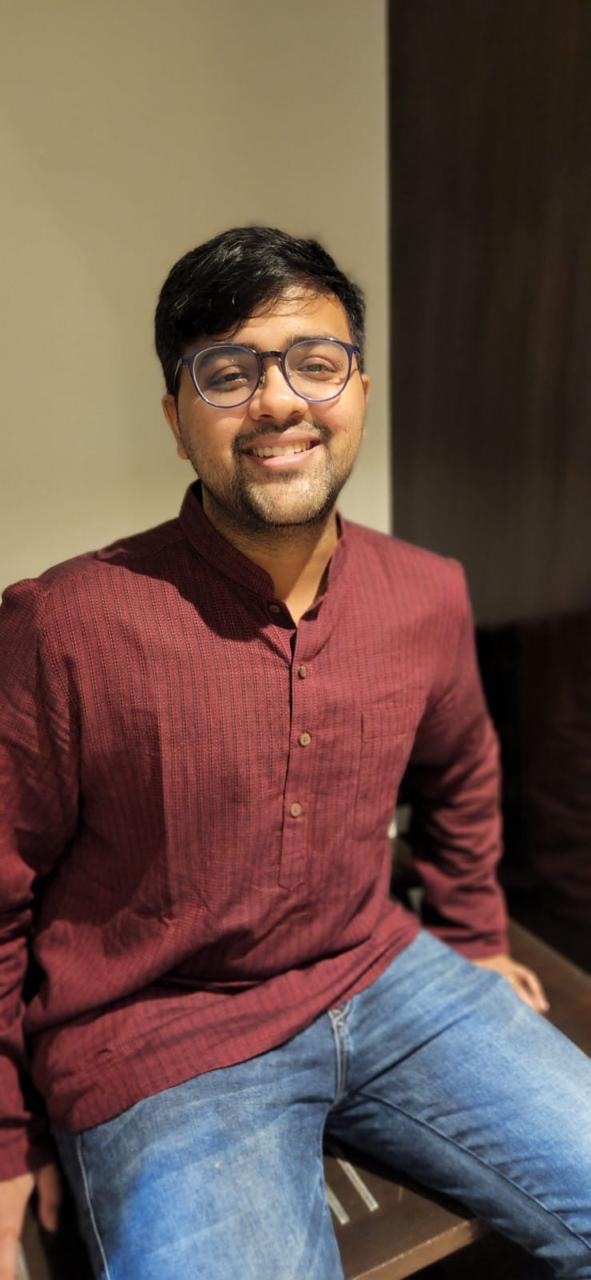
Chaitanya Murali is a fantasy author and game designer who lives in Bangalore with his wife and three cats. He has published one novella, Ajakava, along with several short stories.
About the Narrator
Kaushik Narasimhan

Kaushik is a management consultant by day and moonlights as a one man band with a variety of instruments, a Veena and an electric guitar. He also enjoys writing, reading, and listening to speculative fiction. On the weekends he pretends to be an ace pilot in a tiny Beechcraft Skipper he rents from the local flying club.
