

PodCastle 957: Of Black Town’s Monster by Chaitanya Murali – PART ONE of Two
Show Notes
Rated R
Of Black Town’s Monster
Part One of Two
Chaitanya Murali
February 21st, 1695
We break at dawn. The trance broken, our deed done; we split as dandelions in a stiff breeze, disappearing, melting back into our lives, carrying little but an afterglow so suppressed it appears only as sweat upon our brows.
Tonight, we tell ourselves.
Tonight, we set our trap.
Fort St. George. A town built by the Company, with the promise that it would bring us prosperity. Land surrendered to them on the basis of a lie. White walls built around it to the exclusion of our people.
Only Whites may walk freely within White Town, after all.
I only walk there in the heat of their scorn.
My every move suspect.
My every breath sacrilege.
My every step dirty.
January 7th, 1695, 8:30 A.M.
“Bring that over here, boy!” the White man calls. He stands atop the hill, dressed in the reds of a British officer, complete with feathered hat. I recognize him from the most recent Navy arrivals, the one the elders pointed out to those of us too young to know. Avery, they call him. He is the one we must avoid at all costs.
His eyes are narrow-set in his face, his brows and lips curved into the snarling grimace of a wolf. Even without the warning, I know he is dangerous.
He points at a heavy-looking wooden crate placed near me, at the base of the hill, with his pistol. I look around for Amma, who has gone to sell fish to the Britishers here, but she is nowhere in sight. My duty is to wait here while she finishes cleaning and cutting the fish, and to then carry the bag of fish guts back to our town, where we can feed them to the strays.
I am not to get myself into any sort of trouble here.
Especially after what happened to Appa.
But ignoring the British soldier’s call will lead me into trouble, as surely as disobeying Amma’s will.
But the Britisher has guns.
I know what he wants me to help with, what they never seem to have enough workers for. Renovations — expansions — are being made to the Company office and the Fort itself, as demanded by its new president. He has come here to replace old Mr. Yale, who was the one who built the Town in the first place.
I squeeze my eyes shut and shake my head to rid myself of that man’s image, pink and bulbous in the Madraspattinam heat, leering at me with eyes filled with lust. I hadn’t known the expression then, but I know it now.
That was what had seen him relieved of his post, after all.
“Are you listening, boy? Get that crate here now!” The White man is losing his patience, so I scramble to the box. Always eager to use their weapons, are they.
I take it up slowly, balancing its weight on my head, feeling its contents shift with each step. When I reach the top, I place it alongside the others, leaving it for the laborers to do with what they will. I turn to leave, but the White soldier clicks his tongue at me, stopping me in my tracks.
“Where do you think you’re going? Get up there and work, you lazy bastard,” he says, pointing the gun at the spire that rises — half-built — from the top of the office building. Rickety wooden scaffolding is set up around it, but I already see a number of dark-skinned bodies perched upon it, spiderlike and precarious.
I face him, my eyes trained on the shimmering buttons at his chest, and then the gleaming buckles on his footwear, and then the sharpened point of the bayonet on the rifle hanging from his back. I look everywhere but into his ice-cold eyes.
“I…I don’t work here, sir,” I say, stumbling over the words in my mind. “And I cannot stay out late, Amma worries about the beast in the night.”
He growls like a dog pulled from its food.
“You superstitious savages, moaning about beasts and spirits.” He towers over me now, the whiskers of his moustaches quivering with rage. “Well, now you work here,” he says. “Get up there, or get in the stocks. Your choice. I’m sure your beast will appreciate a free meal.”
I can hear Appa warning me to go with it, “Pannaadhe da, edhayume solladhe.”
He’s done it many times before. Always pleading, always preaching patience.
And look where that got him.
“What about my pay, sir?” I ask.
The pistol butt flashes for a moment as he raises it, and then I see nothing.
January 7th, 1695, Mid-afternoon
“Never talk back.”
The voice I awaken to is wry, experienced. I open my eyes to try and see its source, but my right eye is swollen shut where the soldier hit me. The next thing I notice, when I try to look at the girl who’d spoken through my good eye, is that I’m unable to. My neck and arms are held in place, bolted over with something solid and heavy.
I’m in the stocks outside the fort.
I try my bonds, but they don’t give. Of course, they don’t. They’re solid steel.
I hear the girl return to the crowd that watches me, and I quickly learn why.
Black boots and white pants, both fastidiously clean despite the monsoon-soaked grounds of the city, step up to me.
“Try that again, dog, and you’ll find yourself somewhere far worse than here.”
I am not given the chance to say that I was only asking to be paid.
I can almost hear the creaking of wood when he walks away; the clinking of heavy chains deep underneath him; the pitiful groans of the cargo he transports. His threat is not empty.
The feet retreat from my vision, leaving me blinking painfully at the mud before me.
“Best to just smile your way through it. Makes them feel less guilty, so they’ll stop using you to feel sorry for themselves and their own cowardice.” The girl is back now. The wryness is still there in her voice, but now it carries an edge to it.
My response is a groan that is the first thing that leaves my lips when I part them.
“Got you good, didn’t he?” the girl says.
“I’m sorry, who are you?” The pain in my skull is making me irritable, as is the uncomfortable weight around my neck and wrists.
“Devyani, monster hunter,” she says, as if I should know her by reputation.
“Not much of a monster hunter then. It’s still out there,” I reply.
She’s silent for a moment, as if my sullenness has spread to her. I feel a pang of guilt — it’s not her fault I’m in here, I shouldn’t be antagonizing her, even if she does seem a little too happy for someone watching their fellow rot in the stocks.
When she speaks next, the humor has dropped entirely from her voice, turning dark — feral, carrying the promise of violence. “Come find me once you get out, then you’ll see just what I am.”
A shiver runs down my spine, but the question leaves my lips even through my fear.
“Where?”
She crouches, and I finally see her — her face is thin, as if she’s been recently starved, but there is a lean muscle to her frame that suggests a violent life.
She smiles the smile of a predator when she responds.
“Follow it, and you’ll know.”
I hear her back crack as she stretches, and then her footsteps recede behind me, vanishing into the haphazard huts of our port town — Black Town — that sprawls outside the northern wall of White Town.
Panic sets in my chest, a hammering drumbeat that throbs in my ears. A beast roams the streets at night. One that has evaded all attempts at capture.
Was that an invitation, or a threat?
If I get out, will she be waiting in the streets to kill me herself?
I wait in agony for what feels like days, but is only a few hours, as Suryan drifts across the sky in his chariot to begin his descent back into his palace in the ocean, but the next steps I hear don’t follow the languid rhythm of the White man, arrogance in his gait, confident in his superiority and his dominance; they beat to the frantic pulse of a worried mother.
“Aditya! Dei, eppadi da idhe aachu? Why did they put you in here?” Amma has dropped to her knees and slid up to me, her face now level with mine, her rough hands cupping my face; her eyes wide as the sambar deer when it is slaughtered.
“What did they do to you?” She touches the swelling on my eye softly, but even that is enough to send a fresh wave of pain through me.
“I only asked to be paid to help them,” I say, keeping the other word — the one Sir Yale was so fond of, that he had made his name on — out of my mouth for fear of spitting it in my mother’s face.
She hears it anyway, and we turn away from each other for a moment, wincing against resurfacing memories; scabs torn open; a family riven. No, there is no escaping that word, not while the Company still exists on this land.
“We’ll talk about that when we’re home. Now, hold still.” She pulls her bone pin from her hair, letting it fall in waves to her heels, and begins poking at the locks holding me in place.
“Amma! What if they see you?” I ask, panic welling in my throat, burning me from the inside. It is late, and the White men do not often stay late to torment their captives — not those on public display anyway. But even so, I cannot help but worry that they will catch her — and breaking a prisoner from captivity is a greater crime than talking back to the White man, if only just.
I cannot handle another separation.
“I don’t care. I’m not leaving you out here as bait for that creature to take you — like these monsters took your father,” she says.
But my fears are unfounded, for the moment, as I hear the first lock click open, allowing me to pull my right hand from its shackle. Amma moves quickly over to the other one, working faster now that she’s in rhythm. The second lock tumbles free of my wrist moments later, and then we work together to remove the bar over my head.
When I throw it off my neck, my back screams with the strain of having been bent for half a day, but there is no time to rest or stretch now.
Amma grabs my hand and pulls me away from the grounds and into the shadows of Black Town. We run back to our hut — one of hundreds thrown up just off the beach — and duck inside. We hold our breaths and wait a minute. Then two. Then five.
No shouts sound in the darkness, no torches light up the sand path outside. No heavy boots kick down the flimsy door, and no saber-wielding devils walk through.
We’re safe.
January 8th, 1695, 4:30 A.M.
I open the door to our hut at the first crowing of the rooster.
A crowd has gathered four doors from ours, silent. Grave. Hands over mouths. Shuddering in abject terror.
I peer over the massed heads at the sight, and stifle the moan that pours forth, the bodily rejection of the image in front of me.
A body — no, a torso — lies on the floor, its blood splattering the door and the thatch walls of the hut in front of it. Its other limbs are cast haphazardly around it, as if this man had been pulled apart by each of them at once. Its head is placed carefully on the wooden beam above the door, painted red with its own lifeblood — a mockery of the pumpkin wards we have all placed around our homes.
And walking away from the sight are the bloody prints of a massive wolf.
February 16th, 1695
I have stayed away from White Town for some time, spending those days out at sea with the trawlers and their nets, letting the sun and the salt bake my skin until it cracks. Coming back home well before nightfall and barricading the doors with everything we have.
More attacks have haunted our nights, and despite myself, I search the shadowed alleyways they were taken from for signs of that girl. I think I have seen her in the crowds, but I can never catch up to her.
My work today is different from the usual. Special. Today, the English sailors have come in with bullion. Fishing is an afterthought, ignored in favor of being among the first to take the masula boats to the English ships moored off in the deep water a quarter mile from shore. We carry fish and crab from the morning’s haul to them and return with the cargo they have brought in from their voyages.
I return to shore with my share, leaving a group of landlocked laborers to carry the cargo back into White Town. But as they reach the Sea Gate into White Town, I glimpse something. A face amongst them that does not belong. Devyani.
I’m on my feet and moving before I know it, wrapping myself in a sura-skin cloak to hide my skin, the hood drawn fully over my face. I run to catch up with the cargo transporters, pushing my way into the middle of the caravan of bullock carts. She has already passed through the gate and out of sight, so I make myself as small as I can when we pass under the Gate and the scowling eyes that patrol it, praying that they don’t notice me. The caravan pauses briefly as a guard captain checks the cargo manifest, but he clears it after a cursory pass and lets us through. I empty one crate onto a bullock cart and place it on my head before splitting from the caravan.
White Town houses around three hundred individuals — two hundred White men and women of wealth, and another hundred of their guards and house servants. The sailors do not count among them — they stay moored on their ships, and never linger for longer than a week or two before setting off again for China or some other land to the East.
The Governor’s house was the last act of Sir Yale in this town before his forced retirement. It was a miniscule comfort to me that he never got to stay in the giant stone monstrosity he’d had built for his leisure. To the right of it was the largest building in the Town — St. Mary’s Church. Their preachers held sermons in the streets for those who’d listen, and even had the ‘courage’ to venture into the recesses of Black Town to convert us to join them in their faith. There were those who took to it, but their god held nothing for me.
Not after what their soldiers and their governor — all regular churchgoers — had done to my father.
I did not find it surprising that the preachers did not come to Black Town when it was plagued by a monster.
And now, with the Gate behind me, it is time to find Devyani.
I turn a corner and walk into a red-jacketed British soldier. The crate drops from my head and onto the floor behind me. My eyes flick upwards a moment, past the clean-shaven chin, over the long black moustache framing heat-pinked cheeks, and lock onto a pair of shocked brown eyes.
The same eyes that had glared at me moments before a pistol smashed into my head.
I stumble away from the man and mumble an apology, my eyes turning quickly back to the ground. I bend to pick up the crate, hoping that he doesn’t see that it’s empty, and praying that he didn’t recognize me.
His shadow looms over me, but he says nothing. The crate in my hands, I glance over my shoulder and find him staring intently at my back.
“It’s you,” he says, surprise widening in eyes reddening with anger. His lips part, revealing sharp teeth. Too sharp?
So much for them thinking me beneath notice.
I push the crate into his midriff and run around him, lowering my shoulder into him as I run past him and through the wide cobblestoned streets of White Town.
He yells from behind me, threatening to shoot, though I know that even the Whites are loath to fire their weapons within the Town — can’t have the bullets damaging buildings, or savage blood muddying their pretty roads.
I run for St. George’s Hill, cutting through the fabric market to try and lose the soldier. My path takes me through several women with coiffed hair and billowing dresses, knocking some to the ground in my wake. This, compounded with my other crimes, puts me in line for execution. Not even an exile like Appa’s is enough for me now.
I clear the market and its gawking crowd, and from there I look back to find that my pursuer has found companions for his hunt. And no doubt others have sent to collect reinforcements. The noose is closing about my neck already.
A gunshot sounds in the air behind me, clearing the market in a hurry. My time’s up. There are no passers-by to protect me now, and British sensibilities will not hold them back now that I’ve had the audacity to harm theirs.
Now, now it is time for their honor to take over.
To shoot an unarmed man in the back.
Honor.
To force Appa into purchasing fabric he did not want from them, with money he did not have.
To take everything he owned from him in exchange, and still find him wanting.
To charge him with a crime they created.
To send him off into a world unknown in the hold of a ship, his hands shackled to his feet.
Cargo to be delivered on some distant shore.
I will not be subject to their honor any longer.
I cut into an alley and find myself pulled from the street.
Silence envelops me with the dark, cutting me from reality like a wound, parsing me from existence and throwing me into a void tailored for my despair.
“Stay quiet!”
The same voice, but a different tone.
Her hand grips mine, but when I turn to look at her, her eyes are closed, her brows furrowed in deep concentration.
I try to pull free, but stop when I hear soldiers.
“They won’t see us if you don’t do anything,” she whispers.
“What is this?” I ask.
“A little wisdom I’ve picked up. Now shut up.”
The soldiers enter the alley by the barrels of their muskets, and Avery follows them. They poke at everything they can, but avoid the space we occupy, as if they cannot see it.
Avery stays at the mouth of the alley, and sniffs at the air, like a hound.
Like a wolf.
“He’s not hiding here, sir,” one of his men calls from the opposite end of the street.
“He’s close by, let’s keep looking,” Avery replies. He looks around the alley, his eyes locking onto mine for a moment before they slide past, and then he signals for his men to file out. Only when they’re gone do I breathe again.
“Avery’s got it out for you. Never a good sign.”
Devyani has released my hand, though sweat now pours down her face.
“It’s him, isn’t it?” I say.
She nods.
“We need to move,” she says.
We leave White Town behind us, Devyani leading me through Muttial Pettai — the artisan town — to its east, until we come to a stop at a cave temple that has been converted into a hut, complete with two wooden pillars set outside as a threshold. She enters first, and bids me follow. I look around, but there are no signs of pursuit. More curious than afraid now, I follow.
And step into something beyond my understanding.
The walls of the cave are carved with murals that spread across their entire surface; a single unbroken tapestry woven into the fabric of the rock.
“What is this place?” I ask. “What are you?”
“Safe,” is what she says.
“The house, or you?”
“Both.”
“How long have you known of Avery?”
“I was only a child when the Wolf came to my town.”
She motions for me to sit.
“My mother hid me, like I hid you. Only she didn’t have to stay to maintain it. So she told me to keep quiet and then she left. I obeyed, until I was more hungry than afraid. I found some food and then searched for my family. They had to have escaped the Wolf’s clutches too, if I did.
“But I never found them. And the wolf was gone. I chased him all up and down the coast, hunting for any scraps of information as to my parents’ whereabouts. But eventually I understood. They weren’t coming back.”
Her story was insane — but I didn’t question it. Remove the wolf, and it was mine.
“That’s when I decided that if I couldn’t save them, then the only thing I could do was to save as many from the Wolf as I could.”
“What is he doing? Why not enslave people the way they usually do? Why all this subterfuge?”
She walks over to one corner of the wall. She stands on the bench there and presses her finger to the carvings, searching along them for something.
“What are you looking for?”
“I have been recording everything I know about Avery on this wall, a monument to his crimes, and a warning to whoever finds it — should I fail in my task.”
I join her, my fingers scrape over the rough-hewn edges of the tapestry, until they reach a small figure with the same moustache, the same hat — but the red coat is cast aside, replaced with brown, as he stands under the shadow of a skull and crossbones.
Even we know what that dread flag represents.
His own shadow extends beyond the flag, stretching into the jagged outline of a massive wolf.
The scene scratches itself out under my hand, the sails of that pirate vessel billowing into another scene, where Avery is stood next to the house he’d accosted me at — the Company office that was closed for renovations. His form stretches, falls forward onto all fours; a white wolf on the prowl in Black Town. Stragglers in the night are caught, frightened into submission, and dragged back to the Company office. Avery takes them in, and they do not leave.
It shifts once more, Devyani’s chisel etching into the wall the hold of a ship; that scene that haunted my nightmares. Slaves huddled together as Avery’s pirates dragged them one by one to the deck to scrub or clean or be used as bait or sport.
A fleet of warships out in the open sea, their heart a vessel larger than any I had ever seen. Their colors those of the Mughals who lived far to the North. Five ships waited in the safety of a cove for this convoy to approach, their ambush set.
I see my people, lined up in front of his English crew, trembling as they face down the guns of the Mughal soldiers. Their bodies fall in a line, the chains connecting them to one another dragging even the living to be crushed under the weight of the ocean. The pirates and the Mughals fight on, without a single glance spared for the lives they ruined.
I see Avery atop a bed of riches, howling with glee in the middle of a sea reddened with blood. I see the horrors his crew inflicts upon their victims before they throw them over into waters churning with the delight of sharks.
He is the wolf. The hunter of men; the one who comes in the night. The Bane of Black Town.
“What is this?” I ask.
“His plan. That Mughal ship is the Gani-i-sawai — the Exceeding Treasure, pride of the Emperor’s fleet. Avery is gathering his forces to mount an assault on it. And his pirates need slaves to use on the journey, or to sell when they stop for supplies.”
“Can we stop it?”
“It will be difficult.”
“And what of him? Can he be slain?”
She points to another segment of the wall, a different branch that stretches back from Avery to a younger form of the monster. It shows a scene of battle upon a sinking ship, a human Avery fighting a wolf; his swings wild and desperate, blood pouring from a hole in his throat. The wolf prowls, unhurt by his sword or his gun, its eyes focused on its prize, waiting for it to bleed out. Avery falls to the deck, and the wolf closes for the feast. A flash of movement, a piece of the deck broken and burning from the fight around them, it pierces the wolf where steel bounced off. The wolf falls limp beside Avery, and the two expire together.
And then they are one.
“Burning wood.”
“Sharpened to a blade, yes. I’ve been trying to find a way to kill him for ages, but he’s never easy to find alone — unless he’s a wolf, and that fight is not one I can win.”
“But we have to try.”
We have to stop his future from coming to be. The people of Madraspattinam do not deserve the fate Avery has in store for them.
“We can try finding those he’s taken, free them before they can be moved to his ship. Maybe use the commotion to isolate him,” Devyani suggests.
“How are we going to get inside the Company office? They’ll never let us in there. And that’s if they aren’t out there hunting for me right now.”
But she isn’t listening to me; she is pointing at the wall where Avery stood next to the building. He watches the men and women enter the building, and when the sun sets on the building, men appear at its rear, dragging out those who have been abducted — now chained and meek; drugged. They file outwards from the office and are loaded into a carriage to be taken to the port.
“There’s a secret passage,” I say.
“How do you feel about heists?” she asks, grinning.
We have the beginnings of a plan.
TO BE CONTINUED
Host Commentary
…aaaaand welcome back. That was the opening part to “Of Black Town’s Monster” by Chaitanya Murali, and the conclusion will arrive next week, in episode 958, so we’ll talk more about things then. See you then!
About the Author
Chaitanya Murali
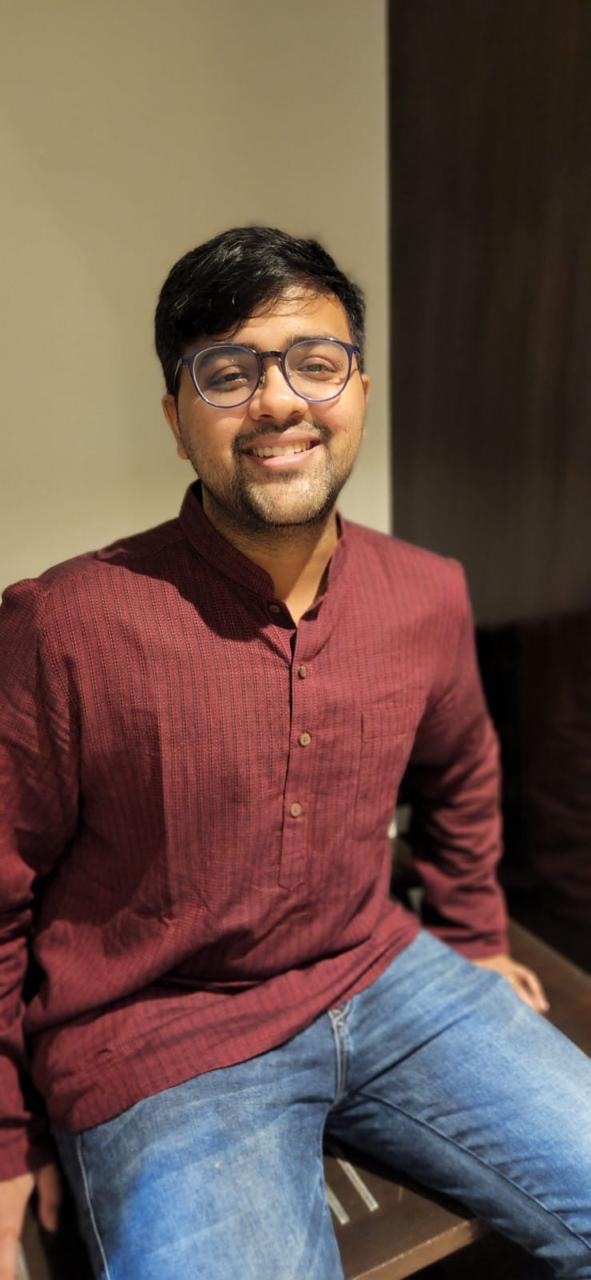
Chaitanya Murali is a fantasy author and game designer who lives in Bangalore with his wife and three cats. He has published one novella, Ajakava, along with several short stories.
About the Narrator
Kaushik Narasimhan

Kaushik is a management consultant by day and moonlights as a one man band with a variety of instruments, a Veena and an electric guitar. He also enjoys writing, reading, and listening to speculative fiction. On the weekends he pretends to be an ace pilot in a tiny Beechcraft Skipper he rents from the local flying club.
