

PodCastle 956: Revolutions, as Told by a Humble Rice Farmer
Show Notes
Rated PG
Revolutions, as Told by a Humble Rice Farmer
by Lia Lao
When the Azure Dragon Emperor, conqueror of the nine lands, abhorred tyrant and most exalted strategist in the history of Jiuzhou, dies, Li Shen is farming rice.
On the other side of the country, there is great upheaval. The Dragon Empress sobs so ardently her tears turn to pearls, and she throws herself into the ocean. The White Tiger Emperor — newly anointed and soaked in silver blood — lets out a cry that will reverberate through history. His men hoist him above their shoulders, stamping on the Great Dragon’s corpse, crushing cyan scales underfoot.
And all around Jiuzhou, scholars write furiously, their brushstrokes turning, twisting, contorting. Trying to capture the tale unfolding as they breathe.
None of which means anything to Li Shen.
He wipes sweat from his brow, skin scorching beneath the sun. Drops fall to the dirt of Ox Village.
It is not because Li Shen is simple.
He holds much knowledge. How to level the paddies, regulating water and preventing erosion. How much water the fields should hold — just enough for the seeds to sprout, but not so much they would rot. The best time to sow seeds — when the crickets sing, when the nights are still warm and tender.
And perhaps, if Li Shen were born in different circumstances, he would care more. He has not yet reached two decades, his mind still supple enough for the imperial exams.
But in this life, he does not have time for such nonsense. Last year, a scourge of locusts left villagers eating dirt, boiling stone soup to stave off hunger. This year, he needs to labor twice as hard to store rice for the winter, ensuring his family does not starve again.
Li Shen swings the hoe to the ground.
He thinks of his mother — too thin to survive childbirth. His father — too in love with liquor to remember his children. His older brother, stronger and more reliable, yet gone all the same when he fell ill, red splotches crawling over his chest, his skin so hot it burned to touch.
Li Shen’s knuckles tighten, whitening.
They could not afford the herbalist. So instead, Li Shen watched his brother sputter like a fish. Then, he crept into the forest to bury his body, hidden between the trees so that no one would see him weep.
But he could not mourn for long. Because there were still so many mouths to feed.
Li Shen strikes the ground again.
His younger sister, still at the age for chasing dragonflies. His last remaining brother, the other too frail to outlast the famine.
So on the day of the Azure Dragon Emperor’s death, Li Shen farms rice. He raises the hoe high above his head and swings: once, twice, thrice. Like a sword coming down, lopping off the Immortal Dragon’s head.
When the White Tiger Emperor is slain, Li Shen is still farming rice.
His younger sister is older now, her wan waist making men’s eyes linger, the age where she must soon start considering marriage if she wishes to lead a better life.
In the capital, there are scandalized whispers. That it was the White Tiger Empress who did it. Slit the Emperor’s throat after he impregnated his second wife.
Who was it that made you? the Empress is said to cry, her claws glinting. Who was it that lined your empty coffers?
But to Li Shen it means nothing. Because his younger sister is not the White Tiger Empress. She is not a noble with silver blood, able to summon the gods’ powers. She is just his last remaining sibling, his brother having perished in the snow. So Li Shen needs to strive harder. Because perhaps if he becomes stronger, he can shield one sibling from this life’s crippling weight.
It is close to the harvest. The paddy water swishes around his ankles. Little yellow carp brush by, the same shade as the ginkgo leaves. He crouches, sweat glistening on his back, his hand twisting around the weeds.
If he doubles the harvest this year, he will have enough for a dowry. Enough to match the betrothal gifts of the merchant with gentle willow eyes.
Brother, do you not wish to marry yourself? His sister asked when he raised the subject. You are still of age.
Li Shen hadn’t known what to say.
His hand stills in the water now.
It is true. Unconsciously, his eyes meet his reflection. He is older, but not yet old, only nearing his third decade. Years of toiling under the sun have roughened his skin, but they have also broadened his shoulders. When he sells rice in the markets, the aunties pinch his cheek, remarking how he resembles his sister. And he knows what the villagers think of her.
Does he not wish to get married?
Suddenly, he feels exhausted, heat rising to his head.
Married.
Perhaps once, his mind supplies traitorously.
As he looks at the rice buds, he thinks of someone else. The herbalist’s daughter, a laugh like wind chimes. Li Shen, she had said, leaning over the counter as he stumbled in, his foot swollen purple. Do you really think left-over numbing herbs will cure a broken foot?
But that had been five summers ago, when he had nothing to offer except a few stalks of flowering rice. And then, her father had married her off to a bureaucrat twice her age.
Does he not wish to get married?
His head aches. The last person he bedded was the neighboring farmer, a man with strong hands. But he cannot possibly marry the neighbor.
So when he sups with his sister that night, he looks into her eyes and says: no.
It’s never really been something I considered.
It is only when the Black Tortoise Emperor ascends that someone notices Li Shen farming rice.
Visitors are rare in Ox Village. Despite the Southern peasants toiling to feed the country, the lotus-skinned nobles still prefer them to remain out of sight. But the Black Tortoise Emperor claims to be different. With his lightless eyes and sharp intellect, he is rumored to foresee the future.
Go. He commands his men to the country’s farthest corners. Tell me what you see and I will prophesize what will unfold.
So the scholar comes to Li Shen’s lowly town.
When Li Shen first sees him in the market, life is a fraction kinder. Earlier this year, he reached three decades, producing enough grain to see his sister joyously wedded. Now, he stands a little taller, surer.
Nonetheless, when the scholar approaches his stall, Li Shen doesn’t know what to think.
“Ah.” The Southern dialect comes off the scholar’s tongue with an unfamiliar, lilting cadence. “You must be Li Shen.”
Li Shen pauses. No one knows his name, especially not nobles who look like they would bruise at the slightest press of his fingers.
“Who’s asking?” he says.
The man gestures. “I serve the Black Tortoise Emperor.”
When Li Shen looks back blankly, the scholar amends himself.
“Have you not heard? The White Tiger was slain; this is Tortoise country now. I was sent to study rice production in the South. Everyone told me Li Shen has the largest paddy in this municipality.”
Li Shen considers him. On the surface, he is unmoved, but inside there is a disturbance. A pebble dropping in the middle of a pond.
“And how did you know I was Li Shen?” he says finally.
The scholar’s eyes sweep over him, settling on Li Shen’s hands: running over every scar, every callus, the large joints of his knuckles.
“You look like a man who works the land,” the scholar says. And his voice is smooth as silk upon Li Shen’s skin.
The scholar follows Li Shen home — call me Simo, it’s the characters for contemplation and ink — insisting it’s part of the process. When they reach the fields, Simo launches into a litany of questions, eyes lighting up.
How do you determine the yield’s quality?
At what distance do you sow the seeds?
What instruments do you utilize for plowing?
Li Shen answers — looking for cracks and clarity in the grain; at roughly two hand spans apart, as uniformly as possible; a standard hoe, but I’ve been working on a wooden instrument pulled by oxen — if only to shake Simo off.
Li Shen does not like the scholar. His eyes fall to Simo’s arm, his sleeve slipping as he writes, revealing obsidian shell merged with skin. It is one thing to hear about silver-blooded nobles summoning gods, fortifying flesh. The strongest — the Emperors — even able to invoke their powers. It is another thing to see it.
So when Simo is finally satisfied, Li Shen leaves the house briskly. The harvest has just completed, so he spends his time beneath the midday sun, working on his invention. A horizontal wooden handle, accompanied by a straight shaft to be secured to an ox’s back. Then, a moldboard, tipped with an iron blade.
In its current state, it should be better than hand plowing. But Li Shen is determined to make it lighter —
By the time he returns to his dwellings, it’s dark. But as he steps through the door, he startles. Because Simo is still there.
“Did you truly devise this yourself?” He points his inkbrush accusatorily.
“This?” Li Shen repeats.
“Your invention. I have never seen anything like it. If my calculations are correct, it will increase efficiency monumentally —”
Frustrated, Simo steps closer.
“You are wasted here. His Imminence foresees a great struggle, the foreigners pressing forward. The country needs all the minds we can get —”
Mind. It seems absurd to be considered a mind. It is a title for men like Simo, who probably compose poems about the moon at mid-autumn or the true face of mountains or equally inane, useless things.
“I do not understand,” Li Shen says. “What does growing rice have to do with foreigners?”
Simo stares. Li Shen continues.
“Do the foreigners consume rice?”
Simo gives a sharp laugh.
“I do not believe so.”
“Then what use would the Emperor have for me? I am a man with no education. No silver blood.”
Now, Simo is really staring at him.
They’re so close Li Shen can trace the line of Simo’s jaw. He’s stronger than Li Shen originally guessed. There’s a certain forcefulness to his shoulders, a solidity to his chest. Li Shen thinks of the ornate sword hanging at Simo’s waist. Perhaps it was not just for show.
“You cannot possibly mean that,” Simo says. “If all you know is rice, then you may well say all I know is calligraphy.”
There’s a silence. Thin, fraught, the string of a zither pulled too tight.
“I think you make a fine calligrapher,” Li Shen says.
And all he can think is it’s a miracle Simo does not draw his sword across his neck.
Winter is the only time Li Shen does not farm rice, but Simo does not let him rest. Instead, he sends letter after incomprehensible letter, and when these go unanswered, Simo returns himself.
Li Shen hears the scholar before he sees him. The thud of hooves, a stallion approaching. When he looks up, a word comes to him: ridiculous.
Because it is truly an absurd sight. Simo in his brilliant red cloak trimmed with white fur. It is the same shade as falling snow: pristine, untouchable. Yet so easily sullied in Ox Village.
“O Humble Rice Farmer, do you know how many sleepless nights your invention has given me?” He leans forward. “But I have a proposal. And surely, you will understand this.”
Simo dismounts, his boots crunching against ice. He presses a scroll into Li Shen’s hands. And Li Shen’s skin sears.
Because drawn on the scroll in Simo’s ornate, sweeping hand is his own invention. Only its shaft is shorter, curved, with a head that rotates freely. Li Shen’s pulse quickens. Because he can already see the increased lightness, flexibility —
“If you invite me inside,” Simo says, “I’ll tell you about it. I’ll even split the rewards on two conditions.”
Li Shen pauses.
“And they would be?”
Simo reaches for the flask on his belt.
“The first,” he says, lips curving, “is that you share a drink with me.”
“And the second?” Li Shen says.
“I’ll tell you after that drink.”
The plum liquor stains Li Shen’s tongue when Simo asks again.
“Come back with me.”
Simo is looser, more languid. His fine fur-trimmed cloak discarded on the floor.
“I told you,” Li Shen says. “I am uneducated.”
Simo jabs a finger.
“And that is precisely what makes it so impressive. Did you know I did not believe you were illiterate? I was convinced you had been formally taught. To think you could intuit mathematics through sheer trial and error, unheard of —”
“I do not have noble blood,” Li Shen repeats.
“And the Black Tortoise Emperor does not care,” Simo says. “He prophesizes great calamity. Ghost-eyed foreigners who will bring an all-consuming smoke —”
And Li Shen is probably a bit too inebriated, because he interrupts.
“A few years ago, the Azure Dragon ruled. Then, the White Tiger.”
And yet he still wakes at dawn and sleeps at dusk. And yet the rice still withers and the drought still comes and pestilence still kills.
“Will the foreigners be so different?” Li Shen says.
For a second, Li Shen thinks he has finally deterred him. Then Simo leans in.
“They will,” he says. “Because if they come, we will lose all the Black Tortoise has built.”
He’s so close. Too close.
“The Black Tortoise is not like the others. He seeks to serve the people. Build a nation with a common creed. He has opened the imperial exams to all, so we may select officials based on ability, not blood. He has seen the future. He understands it is not something he can carve alone.
“That is why I was sent here. What do you want, Li Shen? If you tell me, the Black Tortoise will listen.”
If you tell me, he seems to say, I will listen.
Everything stills, and Li Shen wonders if the Emperor prophesized this too. If he knows when Li Shen hears the earnestness of Simo’s voice, the rich timbre, like the surging of a stream, Li Shen almost wants to believe him.
But then his eyes fall upon the opening of Simo’s robes, his delicate skin and he is too aware of their differences.
Nation. Common creed.
How can Simo claim they hold anything in common? They do not share the same language. They do not even share the same color blood.
“How much gold has the Black Tortoise given you?” Li Shen says.
“It is not about —”
“How much?”
“I would serve him for nothing but my belief —”
“But I cannot.”
“When the Black Tortoise defeats the foreigners, you will be rewarded,” Simo attempts.
But what need does Li Shen have for rewards? His sister is wedded. He can barely imagine such excess; the idea of all those simpering nobles makes his head ache.
And if the Black Tortoise falls, he will have nothing. Not even this meager stability. Not even his rice.
“Prophecies only matter if you believe them,” Li Shen says.
“Then tell me. What do you believe in?”
Li Shen hates the way Simo is looking at him. Heavy, intent.
“Nothing real requires belief. Not the grass. Nor the sun,” Li Shen replies.
And there is a moment. So fragile it’ll break at the slightest exhalation.
“But what if I do?” Simo’s voice lowers, a lake lulling against stone. “Am I not real, Li Shen?”
No, you are not. With liquor in his veins, Li Shen is so sure he almost wants to push Simo down to prove his point. Brilliant and blinding and gleaming — someone like him cannot possibly be real.
But Li Shen does not know what he will do if he is wrong. If he finds flesh beneath his touch instead of snow.
So he furls his fingers into a fist. And he does not dare reach for more.
When the foreigners invade Jiuzhou, Li Shen should not be farming rice.
Not because he would have made a difference. The foreigners are pressing in from the West, far from Ox Village, he could hardly fight them off with his plow. No, he should not be farming rice simply because after four hard decades, his body can no longer take it.
“Brother, the capital has fallen!”
His younger sister — now no longer so young herself — pushes through the stalks.
His heart stops.
Li Shen will always recall every detail. How his vision shuddered in the heat, the flies swarming closer to his flesh. How his hands loosened from the plow, the ox dragging him forward before flinging him off. His back hitting the ground with a crunch, his entire body screaming from the impact.
And then lucidity: I should have known.
Because how long has it been since he received a letter from Simo?
Simo who sent them through all seasons, rain, sun, or snow, until Li Shen started recognizing characters. Who delivered them by hand when he could.
The capital has fallen.
Li Shen has never seen the capital. But he imagines it now: golden silk, lustrous mahogany wood, obsidian gates, all brutalized like bones crushed underfoot. He thinks of a figure — a blade stabbed through his throat.
You should run if the foreigners invade, Li Shen told Simo once, after they tumbled in bed together, drunk enough for Li Shen to pretend it didn’t happen after dawn. Be sensible for once in your life.
In response, Simo laughed against his shoulder.
And what, live without ideals? Without belief? He bit down, just hard enough to make Li Shen wince.
I’d rather slit my throat before they take me alive.
When the Vermilion Phoenix Army comes, Li Shen is not sure if he will continue farming rice.
So much is different. The Army has driven the foreigners out, razing their settlements to the ground, the soil reeking of fire for days after. They insist that summoning the gods is not a matter of blood, but belief. There are no more Emperors, no more scholars like Simo, with their poems composed in that sprawling, ornate hand.
There are whispers that the old palaces — Dragon, Tiger and Tortoise alike — have burned too. And perhaps in coming years, when scholars exist again, they will mourn the silk, the ink, the jade, the gold.
But Li Shen does not care. He has never seen such grand monuments.
He is only glad Simo died first.
When the Phoenix Army arrives in Ox Village, it is with great fanfare. They come in hard-heeled boots and stiff, starched uniforms.
“You workers drive this country,” the Phoenix Youth says, a boy half Li Shen’s age. “Uncle, you are the backbone of the nation.”
There it is again — nation. A word Li Shen has never understood.
“We have great plans for Ox Village.” The youth gestures to the stalks of wavering rice. “We will grow faster, stronger . . .”
He lists grand ideas. How they will plant the seeds closer, so they can grow more, how they will plow the fields deeper, uncovering the richest soil, how they will redirect farmers to construct great steel furnaces, because what they need more than rice is steel, machinery to rival the cunning foreigners. And his men will come personally, lighting the flames with their bare hands —
Li Shen’s skull hammers. He still does not understand.
He does not know how to smelt steel. He is not sure anyone in the village knows how to smelt steel. And as he listens to their plans for sowing, all Li Shen can recall is a faulty harvest, the rice roots smothering one another, choking, refusing to grow.
But he does not voice this aloud, because he is an old man who is almost too frail to farm. A man who, after five decades, apparently no longer even understands how to sow rice.
“Will I still be able to do things the old way?” Li Shen asks instead.
He knows he should have given it up years ago, but there is something comforting about working the land. The repetitive movement of the plow in his hands.
“Will I,” he continues, falteringly, “still be able to farm rice?”
The Phoenix Youth stares for a moment.
Then, he slaps Li Shen on the head, delighted.
“What a great proletariat spirit!”
And Li Shen does not understand this, nor does he understand the laughter that follows.
But he thinks of his rice fields, the flowering yellow stalks that have not yet burned. He thinks of his sister’s children, their wide eyes, their gaping pink mouths that still need to be fed, and he thinks: at least this is something he understands, something that he can control.
Plow.
Sow.
Grow.
Harvest.
And under the smothering heat of summer, Li Shen lets out a long, slow exhalation. The line of his mouth sagging — not quite a smile, but not yet a frown.
Host Commentary
…aaaaand welcome back. That was “Revolutions, as Told by a Humble Rice Farmer” by Lia Lao, and it is her first time on an EA podcast—though surely not the last—and indeed her first time on a podcast outright, so alas, I have no further audio to point you to. But all is not lost! If you go to her website, thelialao.com, there is a very convenient and obvious Short Fiction page linked above the fold that lists five more stories you can read right now, and if you read them out loud then it’s kinda like a podcast, right? At least for anyone in earshot!
On today’s story, Lia said: If history is written by the victors, I feel like it is often those on the bottom who are omitted from it entirely. In this sense, “Rice Farmer” is an attempt to encapsulate that forgotten narrative, to focus on the small, the insignificant, and the often humbling reality of the majority.
This story is very loosely inspired by Chinese history, including: the rise of the first Emperor, Qin Shi Huang, and various aspects of the Cultural Revolution.
The protagonist is also named after the Tang dynasty poet, Li Shen, who wrote “Pity the Farmer” or 悯农 (mǐn nóng):
锄禾日当午,
汗滴禾下土。
谁知盘中餐,
粒粒皆辛苦。
I’ve roughly translated it as follows:
“Weed the rice at noon,
Sweat drips; a monsoon.
Who would know one bowl,
Grain by grain takes its toll?”
Thank you, Lia, for the story and those thoughts, and thank you especially to Curtis for recording the Chinese version you just heard there: it was an above-and-beyond request from us, but given the themes of the story around forgotten histories, it felt important to include the poem in its original language, so I’m very grateful that you took the time to pull the mic out again for us.
A revolution is, of course, a full circle. Too often, in the throes of upheaval, that gets forgotten. Even the most dramatic revolutions in European history—the Russian, the French—fell apart, corrupted by, I suppose, human nature.
We are, it seems, pre-conditioned to look to a leader, our co-operative urge subverted and co-opted into loyalty, so that those who led the revolution are inevitably tasked with ruling after it, though the two domains are wholly different and those best suited to upending the order of things are often poorly suited to maintaining the new order after.
And, of course, absolute power corrupts absolutely, which is a sliding scale on which all power corrupts to some extent. George Orwell’s commentary on the Russian Revolution through Animal Farm is an excellent treatise on how greed, comfort and selfishness will twist a system, though I’d recommend reading the actual book rather than watching the recent film which, er, rather seems to miss the point. I’d recommend the trailer, at least, if only so I can share the horror and disbelief.
I do not know how to solve the issue that those best suited to power are those that don’t seek it. I do not know that there is a solution. I suspect that the kindest outcome is for decentralised, localised, co-operative organisation, where we each take responsibility and work for the betterment of those around us, but I think the world is too big and too populated now, and that horse has bolted; certainly the eco-fascist idea that we need to reduce the population is anathema, and should be resisted as the genocidal philosophy it is.
There’s also a distinct problem around hoping people will take responsibility, but perhaps that is simply something that capitalism has squashed down in us, through exhaustion and distraction. Perhaps we can believe it’s still there, in everyone.
There is a view, though, that the population level, and the level of connectedness we have now, allows for a form of co-operative not tied to geography (an idea familiar to anyone who’s read Malka Older’s Infomocracy novels). I just listened to the book Empires of Normality by Robert Chapman, which the author prefaces with “my aim here is to develop a more radical analysis of neurodiversity history, theory and politics, built from a broadly Marxian perspective”, which might be the kind of description that appeals to you as it did me.
Chapman ultimately arrives at the conclusion that capitalism and neurodivergent liberation are mutually exclusive and fundamentally incompatible, where we—ND folk—are either discarded or exploited by a system that has spent the better part of two centuries seeking to standardise humanity, in all its wild and delightful variety, into predictable, replaceable, exploitable parts. That being the case, the only relief in the short-term is community support, mutual care and leadership within the niche.
Which is something I often see modelled, online, in the trans community, with mutual aid moving money around to where and who it is needed in a decentralised, organic manner, arising from nothing more than an understanding that none of us get through this alone.
Because in the end, many of the problems we face are the same problems, mundane and small scale and inevitable. It is the need for rent; the need for medical care; the need to sow the next rice crop, and reap it, whatever else is happening in the world.
The rice stalk does not care in whose name it is grown, or in which belly it will end up: it grows on its own schedule, and for all our wit, all our dominion over nature, and no matter our proclaimed destiny and divinity, we are all still beholden to the rice. May all those who rise high remember that.
About the Author
Lia Lao
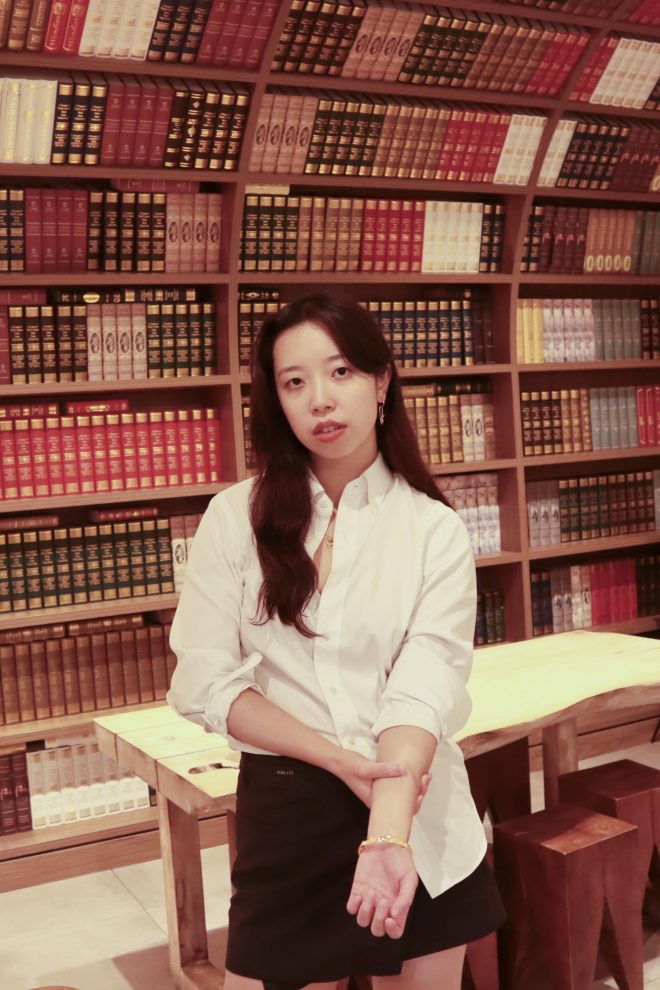
Lia Lao is a writer of literary fiction, speculative fiction, and always — freak girl fiction. Originally from New Zealand, she is currently based in Australia on Gadigal land. She is part of the Clarion West Novel Writing Workshop and Granta Writers’ Workshop Class of ‘26, a Viable Paradise ‘25 alumna, and has featured in Reactor Magazine’s “Must Read Short Speculative Fiction.”
Previously, she has been published in Otherside, Haven Spec, Fusion Fragment, and more. Follow her @thelialao on Twitter/Bluesky/Instagram/TikTok for future updates or check out her website: thelialao.com.
About the Narrator
Curtis C. Chen

Once a Silicon Valley software engineer, Curtis C. Chen (陳致宇) now writes stories near Portland, Oregon. He’s the award-winning author of the bestselling KANGAROO series of funny science fiction spy thrillers and the lead writer for Realm’s Echo Park podcast. https://CurtisCChen.com
