

PodCastle 927: The One Who Carries Abinakhee Has Died
Show Notes
Rated PG
The One Who Carries Abinakhee Has Died
by Jay Kang Romanus
I’m leaning in to kiss a stranger when the shooting star passes overhead. The sounds of people celebrating nearby swim through the humid air like the ancient turtle below us swims through the world’s ocean and the shooting star above swims through waves of night sky. I’m still breathing heavy from my performance, glowing from the warmth of so many eyes on me and the warmth of the stranger’s body next to me.
“Did you see it?” I ask, momentarily distracted from his well-shaped lips. He nods.
“My mother used to say they were the starships of those who left us behind.” He smiles at me with those extremely well-shaped lips. “I don’t think she was right about that, though.”
Cheering spikes through the quiet before fading away and it seems short-sighted to be spending the rare occasion of a funereal confluence with just one person, in the town I’ve spent my whole life in, on the back of the Great One whose shell has been the borders of my entire world since I was born. But he is a stranger, he wouldn’t be here without the confluence, and that’s my excuse for short-sightedness.
“Probably not,” I reply. “I like to think the guilt of seeing what became of us would be unbearable to them, so they flew far enough away that the guilt couldn’t follow.” He laughs, and I’m grateful that the remaining performance makeup on my face is thick enough to cover my embarrassed flush. “Is it so naive to think they felt guilt?”
The stranger places his hand on my shoulder with a smile, and I feel warm all over again. “Perhaps, but it’s a nice thought.”
We sit in silence for a moment, listening to the electro-kites crackle softly overhead. During a thunderstorm, the sound of them collecting electricity is deafening, but the skies are quiet tonight. It’s humanity’s turn to make noise. The last time a Great One died was long before my birth and sailing between them is perilous on these high seas, so the occasion demands celebration, even as the lowing of the other Great Ones mourning their fallen comrade vibrates through the water below us.
I can see lights in the distance from where we sit on a crag midway down the shell; a rare expenditure of some town’s stock of irreplaceable bulbs, but worth it for tonight. Maybe the ones I’m looking at are the lights of Abinakhee itself, honoring their Great One’s service for carrying the town through centuries.
They’ll have known it was coming; known they’ll be leaving everything familiar behind as their community fractures and disperses. After tonight, the only ones left there will be the elders too stubborn to leave their home, even as it becomes nothing more than a floating pile of rotting flesh. Years from now, the acrid seawater will break through the softening shell and everything will sink. I imagine the scrubby trees that cling to life on all the Great Ones’ soil-clad backs disappearing beneath the waves.
But that will take years. Now, the Great Ones sing their secret names to the lifeless monument of the One Who Carried Abinakhee, their names we cannot know, beyond knowing they must have them. Now, every humped island sitting on the water is teeming with life. An overwhelming growth of life, inhaling and exhaling under the starlight. In all my memories, the ocean view has always been empty except for the horizon and an occasional sail, and I struggle to comprehend the amount of people my field of vision contains. The performers and vendors, families reuniting with loved ones they haven’t seen since the last confluence, little boats packed to the brim darting between each turtle, all breathing and speaking and pulsing hot with blood.
“I truly enjoyed your performance,” the stranger finally says, and I blush again under my makeup, though it’s a good thing this time. “I’ve never seen anything like it.”
“That’s very kind of you to say. It’s called bhayshing-opera, after some city of the undrowned Earth. My grandfather is very proud that his family line has been able to carry the tradition down through so many generations, but I’ve never performed for so many people before.” I scratch a peeling flake of white paint from the side of my nose awkwardly. “Well, I suppose you could’ve guessed that.”
“I enjoyed it,” he repeats. “You were fantastic.”
I don’t say that I already knew I was fantastic. I was so alive I became life itself on that stage. In the past, whenever outwater sailors would dock at New Tash for a day or two, we’d put on a show, and those little moments of adoration (or derision, or confusion; it didn’t matter, as long as they watched) would flow into me and keep my spirits high for the months and years that could pass between visitors. I can only guess at how long that feeling multiplied by a hundred will sustain me.
“Well, thank you.” I reply politely, then scoot a little closer. “I have another performance soon,” I add, hoping he’ll get the hint that we need to hurry up to the fun part.
He doesn’t. He looks at the sky again, as if the shooting star left a trail of glowing astral matter for him to trace with his eyes. I wait patiently — his neck is also very well-shaped, which makes it easier — and he eventually turns back to me. He has a strange way about him, but maybe that’s how they all are where he comes from.
“We should make sure you’re not late for that.” He gives me a bright grin. “You said you work at the hatchery here, no? I’d like to see it before you have to head back, if that’s alright.”
“You don’t have one in your town?” I ask, hoping my voice doesn’t sound too sulky. It isn’t strange — not every Great One is female, so not every town needs a hatchery to take care of her eggs — but I’m not pleased.
There’s an awkward pause, after which he shakes his head. “No. It’s something I’ve always been curious about.”
I can’t find fault with that. Our future lies in the hatcheries, after all, for if the Great Ones die out, where do we live? On the few bare peaks that poke above the waves like little fingers of the solid ground below, reaching for air as it drowns? That’s not a real future; it’ll leave us shrunk to an existence that holds no space in it for one to paint their face, step on stage, and tell stories that expand our little lives into something much grander.
Not a real future.
“Of course, I understand,” I say. I hop to my feet and help him up. His hand is warm in mine, and I catch the flash of a smile before I turn away, beckoning for him to follow.
We walk along the shell’s edge where craggy growths protrude out into the air, over the tangled nests of roots that hold this Great One’s skin of dirt in place. My eyes track the frothy line of waves that marks the slow strokes of the massive flipper up ahead, gently rotating against the current to hold the One Who Carries New Tash still as she mourns. The sounds of the town grow louder as we approach. New Tash’s hatchery is perched above her Great One’s shoulder, and we walk until the salt spray christens us.
The hatchery is made of the same bricks as every other building on the island; dull brown sargassum seaweed from the farmed pelagic mats strung in our wake, crushed into a paste with sandy clay and baked solid. Guy lines screwed into the shell to hold the building stable thrum in the sea breeze.
I unlatch the door and beckon my new friend in. The hum of partying crowds in the distance is replaced by the gentler hum of electric heaters. Each egg has its own, and there are many eggs. They line the walls, large and leathery in their padded nooks. At the other end of the hatchery is our equipment table and a pair of double doors swinging gently in the breeze. Behind them, cantilevered off the edge of the shell, is the crane we use to lower the eggs into the water by the Great One’s head for the dual purpose of letting her check on their well-being and to keep them as wet as they need to be.
The air inside the hatchery is humid; a microcosm of the Great Ones’ tropical breeding grounds and warm enough that sweat springs to my forehead within seconds. I let my friend look at the eggs in the moonlight for a moment before shutting the door behind us. The close darkness presses all around, not suffocating but instead cradling, as if we stand inside a great womb.
“Apologies,” I murmur, waiting for my eyes to adjust. “I’d keep the door open, but if the eggs aren’t kept humid the babies will hatch malformed.”
“Understood,” he replies. “May I touch them, at least?”
“Of course!”
I guide him towards the wall as the outlines of the cubbies come into dim gray focus. We reach out together and place our fingertips on the rough surface of a shell. It gives slightly under my touch, but I know that the material is tougher than a chicken egg’s brittle shell; nearly impossible to shatter or tear.
“Incredible,” he breathes, and it warms my heart that he understands. We owe everything to these miraculous creatures — wise beyond our comprehension and gracious beyond our experience — these living manifestations of an undeserved second chance to create a home on this world scarred beyond repair by our actions.
He mutters something else that I don’t quite catch, and then there’s a click of something plastic falling to the floor and a whisper of air towards my neck that I reflexively jerk away from before I understand what I’m hearing.
I grab his wrist, unsure of what I’m looking at. The moonlight seeping through the space around the doorways glints off a thin piece of metal in his hand, and I realize that he’s holding a syringe. I’ve seen them before in New Tash’s little hospital, but they’re a rare and limited resource. Not something I’m particularly familiar with.
“I don’t understand,” I say, because I truly do not.
“I said I was sorry.”
“For what?”
He opens his hand to present the syringe to me, and I take it gingerly. I don’t like the look of the tarry substance coating the inside of the tube, but better me holding it than him.
“It wouldn’t have hurt you,” he tells me. “You would’ve only slept long enough for me to inject the eggs.”
“Why?” I whisper. “What does it do to them?”
“Malformation. Death. A failed brood from a Great One likely too old to lay more.”
“I don’t understand,” I repeat. I don’t say that I thought he did and I’m bitterly disappointed by this turn of events. It isn’t the time for personal melodrama. “The Great Ones are the only reason we still live.”
“They’re a distraction,” he says. “Look at what you’re holding. How many do you have left here? Very few, I would assume. And what happens when they’re gone? No more intravenous medicine, and no way to smelt more, because we have no metal.” His jaw works, planes of shifting black and gray in the moonlight. “Just one example of how we’re still dying, only too slowly for anyone to notice.”
I stare at him, knowing my mouth is agape but unable to master myself. “Your solution is to kill off what’s kept us alive this long?” I manage to sputter eventually. “To attack these beings who gave us this gift even after seeing what we are? You’re as bad as the ones who left. Actually, you’re worse, because you’ve seen the consequences of their actions. How could you still act like them?”
“They’re alive, aren’t they? They’re somewhere out there in their beautiful starships, living like gods, instead of waiting to die like us peasants down here.”
“Speak for yourself,” I scoff.
“I am,” he retorts. “The rest of you are too stupid to realize that’s what you’re doing, except for my compatriots.”
“I still don’t understand. You’re killing what’s keeping us alive.” I feel like a broken gear, clicking and clicking in useless repetition, but what else is there to say?
“Yes, so you all wake up,” he breathes passionately. “Once everyone realizes there are no more Great Ones left, my organization will arise. In every town, we’ll preach how there is no future but ours, and you will all listen. Humanity will pool its resources and build a radio tower, the likes of which haven’t been seen since before the seas rose. We will call our ancestors, and they will come to save us, and humanity will finally leave behind this dying planet for good.”
“You’re deranged,” I say. “They left us behind in the first place. You said it yourself; we’re peasants. We’re the poor who couldn’t buy our way onto those ships in the first place. Why would they accept us now?”
He sighs. “I was hoping you’d be convinced. You seem intelligent, and I truly do like you.”
“Fuck your mother,” I snap.
“She’s dead,” he replies. “She died from a simple infection that could’ve been cured by any elementary antibiotic had my town not run out of them the year before.”
His admission catches me off-guard. I open my mouth, to say something sympathetic, perhaps, maybe even turn him from his destructive course, I dream for a wild second, and in my moment of paralysis, he strikes. His fist connects with my stomach, driving all the air out of my lungs in an instant. As I double over to retch, he snatches the syringe out of my loose grip, and I drop to the floor out of instinct more than anything else.
My head swims with black spots while I try to choke breath into my lungs. He lunges at me, so I scrabble backwards, doing anything I can to keep the syringe from touching my skin. He’ll kill me if he can, I know this. Even if he’s able to inject the eggs, he can’t risk me doing anything to upset his “organization.” This way, I’ll be just another person lost during the great reshuffling of a confluence. It may be a time of celebration, but more people fall through the cracks now than any other time.
I lash out wildly with my foot, connecting with his shin more out of luck than anything else. He falls to one knee with a yell. I don’t have time to think, so I fling myself at him instead, careful to avoid the tip of the syringe. I wrap my arms tightly around him and throw myself through the doors in the back that open over the ocean. We bounce off the edge of the crate and careen into open air, and then we’re both free-falling towards the unforgiving water below.
My mind goes blank with panic. I had no time to consider my actions before I took them, and there’s certainly no time now.
He hits the water with a painful crack barely a second before I do.
Even if the impact hadn’t forced the air from my lungs, the cold would have done so by itself. I gasp, and freezing saltwater rushes into my mouth, my nose, my throat, burning all the way down. I can just barely make out my erstwhile friend sinking below me, and then the riptide from the Great One’s fin jerks him downward like a fish on a line. And he is gone, dragged into the depths as if he never was, with a brutal suddenness that shocks me into motion.
Even as I paddle desperately forward, I know the riptide comes to claim me too. The urge to survive is stronger than all logic, so my body moves at the same time as I squeeze my eyes shut and prepare for the end.
An end that never comes.
After several agonizing seconds, it occurs to me that if I was going to be dragged down like him, it would have happened already. My body’s spastic paddling ceases, and I open my eyes to the sight of the Great One’s own eye staring directly back at me, limpid intelligence clearly visible through the moonlit water.
I hang suspended for a long moment, the burning in my lungs forgotten.
I have never come face to face with a Great One before. The diameter of her eye is at least three times my height, while the rest of her head disappears into shadow. An absolutely breathtaking being. Her scale is something I cannot hope to comprehend, and yet her eyes look like mine writ large. Clear brown irises with a round pupil in the center. Self-centered, to feel awe at familiarity, but we are self-centered creatures. Gratitude rushes through me, at her wisdom and kindness, and at a world that could create such a being.
Her massive eyelid blinks slowly, as if in acknowledgment, then her fin is rising beneath me. I break the surface, clinging to her rough skin for dear life and vomiting saltwater until the back of my nose stings. She carries me above the lip of her shell, and I tumble off onto the dirt. I collapse into a heap, reeling from the events of the last few minutes. Too much has happened in too short of a time for me to have internalized any of the appropriate emotions, but they will come.
The Great One’s fin crashes back into the water, and I let the spray soak me, too weak to move just yet.
Somehow, I drag myself back to my grandfather’s stage. He doesn’t ask why I look like a drowned rat, and for that I am grateful. We reapply our makeup in silence: me, an exaggerated human face in stark shades of white and red and black, him painting on the teeth and nose of a long-dead animal. My lines are shakier than usual, but it can’t be helped.
For a moment, I consider telling him that I can’t go onstage. A man tried to kill me, and then I killed him, and the eggs are safe, but only for now, and my lungs are raw with salt, so how can I sing?
I consider it, but then the crowd roars outside, and a rush of warmth flushes away my tremors. Yes, they’re nothing but self-centered beings whose only goal is to live, but what animal isn’t? The Earth floods and freezes, and the cycle turns, and if our era is coming to an end then so be it. I can only hope that the Great Ones will take better care of this planet than we did.
But in the meantime, we live yet, and I have a show to put on.
An expectant hush falls as I step onstage, and I drink in their bated breath on my inhale, before exhaling into the notes I know so well. The world of this tale I sing no longer exists, but right now, that doesn’t matter. I live it anyway, and the audience lives it through me.
And as I dance away the night, shooting stars fill the sky above me, and I know in my heart that they are no starships, merely something else beautiful in a universe overflowing with beauty.
Host Commentary
…aaaaand welcome back. That was “The One Who Carries Abinakhee Has Died” by Jay Kang Romanus, and if you enjoyed that then his website is at the straightforward to remember jaykangromanus.com, with a bunch of links to more stories on the front page. Couldn’t be easier. Thanks, Jay!
Jay sent us these notes for today’s story: No accounting for taste, but Waterworld is one of my favorite movies, and the question of how humanity might survive in a post-glacial age is very much on my mind right now. I had a lot of fun coming up with the lightning kites and algae farms, but at the end of the day, I don’t think survival will be possible without nature extending us a helping hand that we as a species don’t necessarily deserve. I wanted to explore how that might look, and how we might take that hand without taking advantage of the Earth. That harmony was inspired by the story of Tolba the Turtle from Abenaki (W8banaki) mythology, which I paid homage to with the name. As a writer, though, I know just surviving isn’t enough, and that’s where the emotional drive of this story comes from. What feeds our souls, beyond the animalistic need to live? I have a few ideas, and I hope this story makes you think about how taking care of the world intersects with taking care of hearts.
Thanks, Jay, for the story and the thoughts behind it, which resonated with me on… a lot of levels. I mean, giant turtles for one, cos I’m ride or die for Discworld, and I’ve harped on about climate collapse and global warming for many an outro. I’m even, while we’re in a confessional mode, also a fan of Waterworld’s aesthetic, even if I rarely have the patience for the actual film itself. Or The Postman. Man, Kevin Costner is bad at understanding runtime.
But what really gets me, right here right now, like a dagger to the heart, is the dichotomy of surviving vs living, and what makes that difference. There’s been patches in 2025 where I’ve vanished from these host spots for a couple of weeks or so, and every time that has been fully—and exclusively—from overwork. I’ve ended the year with something like 12 weeks of overtime owed, and more than once have done weeks that were more than double the hours they actually paid me for, working through evenings and weekends and with no hours left in my week, nor thoughts left in my brain, to read, write and record these outros for a story.
They have been the times where all I’m doing is surviving, not living, and it crushes me. And I mean that almost literally—as a person, as a personality, I all but vanish, and become nothing more than a puppet for the task list before me, a vessel through which productivity may flow. And I hate it. It’s not what I’m on this godsborn earth for! I have always been a work-to-live person, never had any interest in the rat race or the ladder climb or whatever metaphor is in vogue to disguise and describe the ongoing exploitation of all our labours, the shrivelled carrot dangled before our eyes.
Unfortunately—further to the outro of episode 919 a couple of months back—that new job opportunity did not pan out for me, and I am still trying to reconcile and grieve the loss of that future where I might have had things like “work/life balance” and “adequate compensation for my skills and time”. I’m also—as the sole earner in a disabled household—not in a position to simply walk away. So I need to find a way to make it work, because whilst art and music and community are the difference between surviving and living and there is little point in the former without the latter… you also can’t live unless you survive. The starving-artist stereotype is and always has been a nonsense, and people do their best work when they are safe and secure and provided for.
So I need to find a way to balance the two halves, because I am tired of just surviving. I am, statistically, at the halfway point of my life expectancy, and the impact I want to leave on this world is not one measured in share prices and dividends, but something you could never measure, something comprised of ideas and emotions, something that leaves the world a kinder place than I found it. I want to be here, doing this, talking to you about that better world we all believe in, and the stories that will guide us there. So I hope I see you next week, and the week after, and all the way through 2026, because I need to start living again.
About the Author
Jay Kang Romanus
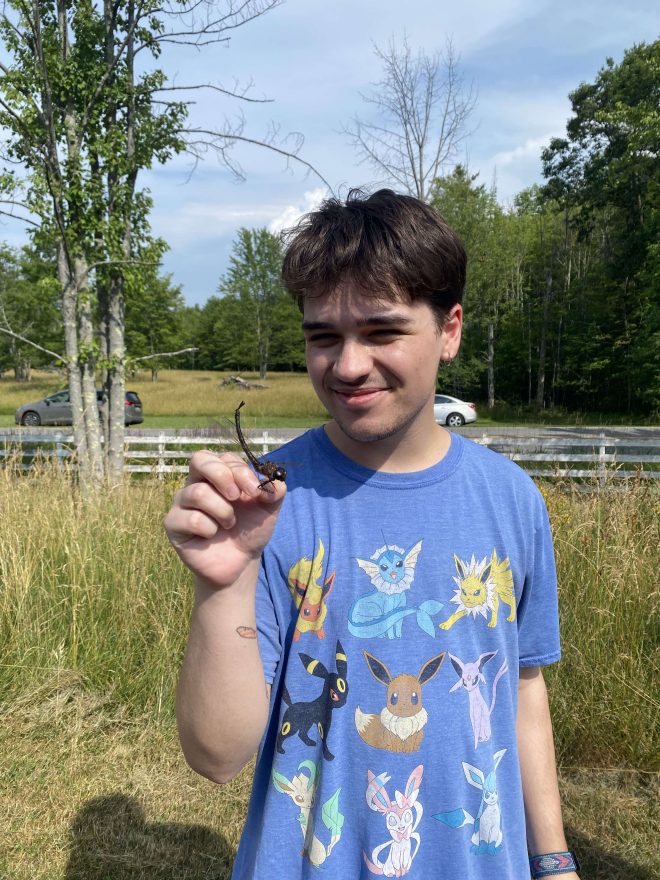
Jay Kang Romanus is a queer, mixed, Asian-American author of speculative fiction that explores the experience of living this intersectionality in worlds not our own. You can find his other short stories in magazines such as Anathema: Spec from the Margins and forthcoming in Kaleidotrope, as well as multiple anthologies. He is also the editor of Dudes Rock, an anthology of speculative fiction celebrating queer masculinity published in 2025.
About the Narrator
John Chu
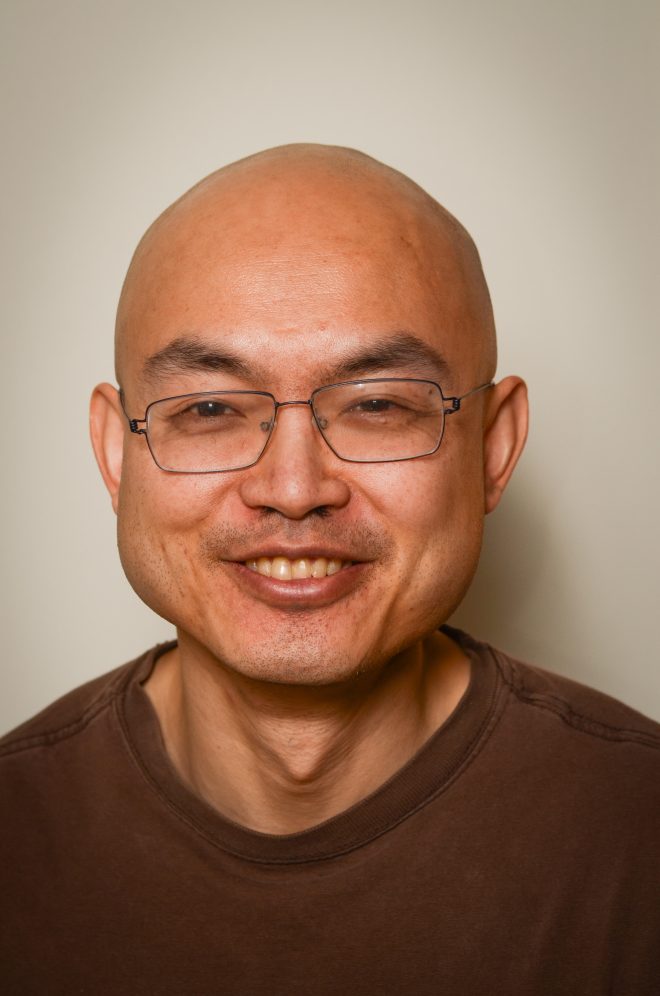
John Chu is a microprocessor architect by day, a writer, translator, and podcast narrator by night. His fiction has appeared or is forthcoming at Boston Review, Uncanny, Asimov’s Science Fiction, Clarkesworld, and Tor.com among other venues. His translations have been published or is forthcoming at Clarkesworld, The Big Book of SF and other venues. He has been a finalist for the Hugo, Nebula, Locus, and Ignyte Awards, won the Best Short Story Hugo for “The Water That Falls on You from Nowhere.” and won the Best Novelette Nebula for “If You Find Yourself Speaking to God, Address God with the Informal You.” His novel, The Subtle Art of Folding Space, was published by Tor in April, 2026.
